Table of Contents
ToggleMost homeowners never think about cold storage precision until they need it. Standard kitchen refrigerators cycle temperatures up and down, which works fine for leftovers but fails when temperature stability matters. Vaccine refrigerators maintain tight temperature ranges, typically between 35°F and 46°F, without the fluctuations that degrade sensitive biologics. Whether you’re managing injectable medications, storing veterinary vaccines for livestock, or running a small home-based practice, understanding medical-grade refrigeration isn’t optional. This guide walks through what sets these units apart, who benefits from owning one, and how to install and maintain them for reliable long-term performance.
Key Takeaways
- A vaccine refrigerator maintains tight temperature ranges (35–46°F) with forced-air circulation and digital monitoring, preventing the temperature fluctuations that destroy vaccine potency and biologics.
- Vaccine refrigerators are essential for home-based healthcare providers, livestock owners, chronic condition patients requiring injectable medications, and preparedness enthusiasts—not standard kitchen appliances for typical homeowners.
- Critical features to prioritize include compressor-based cooling, audible/visual alarms with data logging, lockable doors, forced-air fans for uniform temperature distribution, and NIST-calibrated digital thermometers.
- Proper installation requires placement in climate-controlled spaces (60–75°F ambient), 2–3 inches of rear clearance for ventilation, level positioning, and connection to a dedicated GFCI circuit with optional backup power for critical applications.
- Maintenance demands daily temperature log reviews, weekly door seal inspections, monthly condenser coil cleaning, annual professional calibration, and documented outage protocols to ensure compliance and long-term reliability.
What Is a Vaccine Refrigerator and Why Does It Matter?
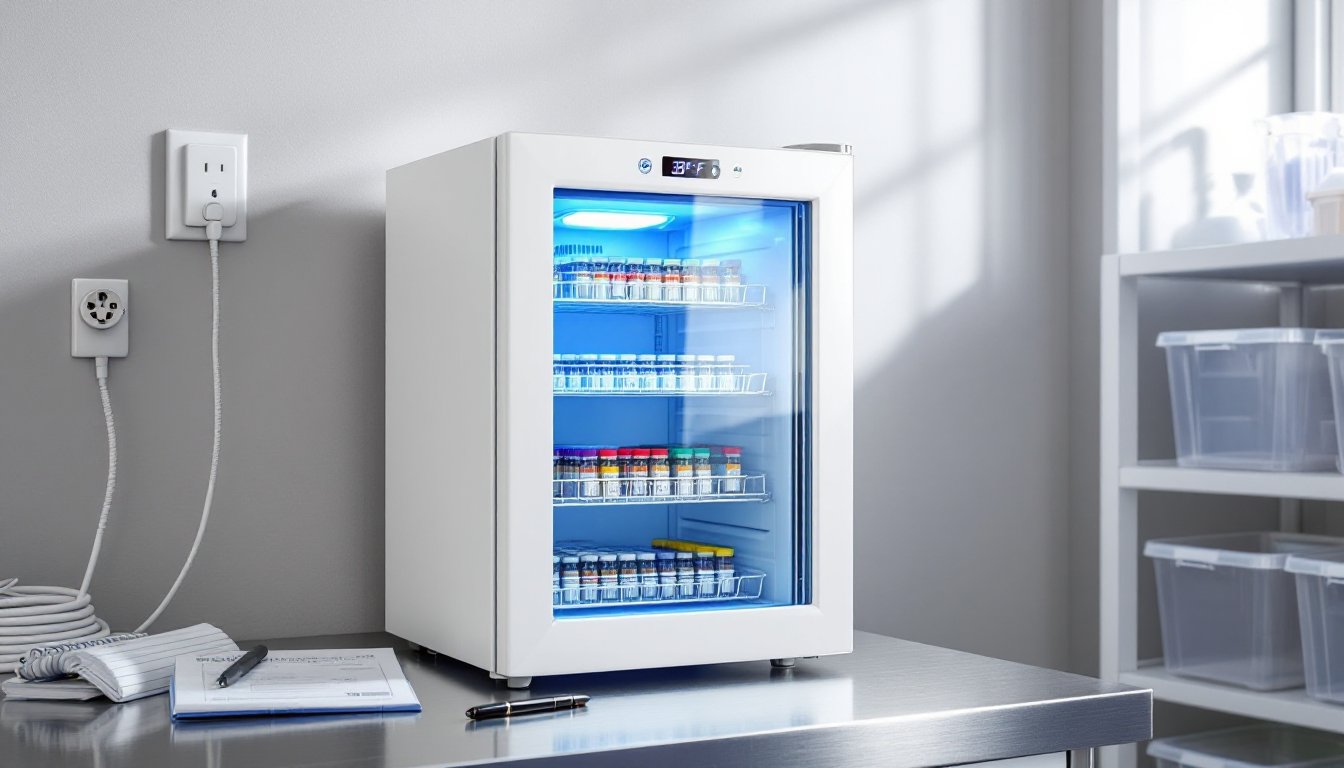
A vaccine refrigerator is a purpose-built appliance designed to maintain a consistent internal temperature within a narrow range, usually 36°F to 46°F (2°C to 8°C), as specified by the CDC and WHO for vaccine storage. Unlike household refrigerators that use a single thermostat and allow temperature swings of 5–10°F during defrost cycles, vaccine fridges employ forced-air circulation, insulated compartments, and digital monitoring to prevent hot or cold spots.
These units often include microprocessor-controlled compressors that adjust cooling output in real time, eliminating the freeze-thaw cycles that destroy vaccine potency. Some models feature dual-compartment designs, separating vaccines from diluents or other temperature-sensitive materials.
Why it matters: Even a few hours outside the safe range can render vaccines ineffective. The COVID-19 pandemic highlighted storage challenges across healthcare settings, from clinics to veterinary offices. For homeowners managing chronic conditions requiring injectable biologics, such as growth hormone, insulin analogs, or immunotherapy agents, a standard fridge isn’t adequate. Temperature excursions void manufacturer guarantees and compromise efficacy, turning expensive medications into waste.
Key Features That Set Vaccine Refrigerators Apart
Medical-grade units differ from consumer appliances in several critical ways. Look for the following when evaluating options:
Thermoelectric vs. Compressor-Based Cooling
Compressor models provide stronger cooling power and faster recovery after door openings, making them better for high-use environments. Thermoelectric units run quieter and use less energy but struggle in warm ambient conditions (above 75°F).
Alarm Systems and Data Logging
Most vaccine refrigerators include audible and visual alarms triggered by out-of-range temps, power failures, or door-ajar conditions. Higher-end models offer USB or cloud-based data logging, creating tamper-proof temperature records, essential if you’re storing medications under insurance or regulatory oversight.
Lockable Doors and Interior Organization
Security locks prevent accidental access, especially in households with children. Adjustable shelving, wire baskets, and door bins help organize vials without blocking airflow. Avoid overloading: units perform best at 50–75% capacity.
Temperature Stability and Monitoring Systems
Temperature uniformity is non-negotiable. The CDC requires vaccine storage units to maintain ±2°F variance throughout the interior. Achieving this depends on three factors:
- Forced-air fans distribute cold air evenly, preventing stratification. Without fans, the top shelf can be 5°F warmer than the bottom.
- Digital thermometers with min/max tracking let you review the coldest and warmest temps since the last reset. Analog dial thermometers lack this precision.
- Calibration certificates verify accuracy. Look for units with NIST-traceable probes that can be recalibrated annually.
Some advanced models integrate with building management systems (BMS) or send alerts via text/email if temps drift. This feature is overkill for most home users but invaluable if you travel frequently or manage inventory for a small farm or clinic.
Who Needs a Vaccine Refrigerator at Home?
Most homeowners won’t need one, but several scenarios justify the investment:
Small-Scale Livestock Owners and Hobby Farmers
Veterinary vaccines for chickens, goats, and cattle require the same cold-chain integrity as human vaccines. Buying in bulk and storing at home cuts costs, but only if you prevent spoilage.
Home-Based Healthcare Practitioners
Midwives, traveling nurses, and telehealth providers who administer vaccines or biologics at patients’ homes need compliant storage. Some states mandate medical-grade refrigeration for in-home practice licensure.
Chronic Condition Management
Patients using injectable medications, growth hormone, fertility drugs, certain biologics, may receive multi-month supplies. Standard fridges can’t guarantee the stability these drugs require. Manufacturers’ storage guidelines often specify “pharmaceutical-grade refrigeration.”
Preparedness Enthusiasts
People investing in backup antibiotics, epinephrine auto-injectors, or other emergency biologics want assurance that stockpiles remain viable. A vaccine fridge paired with a backup generator or battery system offers that confidence.
Before purchasing, confirm your use case with your prescribing physician or veterinarian. Some insurance plans reimburse the cost if a doctor documents medical necessity.
Choosing the Right Vaccine Refrigerator for Your Space
Vaccine refrigerators range from compact 1.4 cubic-foot countertop units to freestanding 20+ cubic-foot models. Match capacity to your actual need, oversizing wastes energy and floor space: undersizing forces overloading, which kills airflow.
Capacity and Footprint
For a small home farm storing a dozen vials, a 2–4 cubic-foot undercounter model suffices. Home healthcare providers managing patient supplies may need 6–10 cubic feet. Measure your installation space, including clearance for door swing and rear ventilation (typically 2–4 inches).
Energy Efficiency and Power Requirements
Energy Star-rated models save on operating costs. Check the unit’s annual kWh rating: efficient units consume 200–400 kWh/year. Most plug into standard 120V outlets, but larger compressor models may require dedicated 15A circuits. Avoid extension cords, they introduce voltage drops that stress compressors.
Budget Considerations
Entry-level countertop units start around $400–$600. Mid-range undercounter models with alarms and data logging run $800–$1,500. Commercial-grade freestanding units with advanced monitoring exceed $2,000. Factor in annual calibration costs ($75–$150) and potential backup power solutions.
Prioritize features that match your risk tolerance. If you’re storing $500 worth of veterinary vaccines, a basic alarm system may suffice. If you’re managing $3,000/month in biologics, invest in continuous monitoring and redundant alarms. Kitchen design trends lean toward integrated appliances, but vaccine fridges often perform better as standalone units in climate-controlled spaces like basements or pantries.
Installation and Placement Best Practices
Proper placement directly impacts performance. Follow these guidelines:
Environmental Conditions
Install in a space with ambient temps between 60°F and 75°F. Avoid garages, sheds, or uninsulated basements where temps swing seasonally. High heat forces compressors to run continuously: extreme cold can prevent units from cycling on.
Clearances and Ventilation
Leave 2–3 inches behind the unit for condenser airflow and 1 inch on sides. Built-in models require specific venting per manufacturer specs, don’t improvise. Poor ventilation shortens compressor life and causes temperature drift.
Leveling and Stability
Use a bubble level to ensure the fridge sits plumb. An unlevel unit stresses door seals and causes uneven cooling. Adjust leveling feet until the bubble centers. On uneven floors, use shims cut from composite decking or plastic (wood can compress).
Electrical Connections
Plug directly into a GFCI-protected outlet on a dedicated circuit. Label the breaker “Vaccine Refrigerator – Do Not Shut Off” to prevent accidental power loss. For critical applications, connect to an uninterruptible power supply (UPS) rated for the unit’s startup surge (typically 3–5x running watts).
Initial Setup and Stabilization
Allow the unit to run empty for 24 hours before loading. Place a calibrated thermometer (not the built-in display) in the center and monitor temps every 2 hours. Once stable within range for 24 hours, begin loading gradually, don’t fill it all at once. Remodeling for home efficiency often includes dedicated utility spaces that suit medical-grade appliances better than repurposing kitchen zones.
Safety Note: Never install near heat sources (water heaters, furnaces) or in direct sunlight. Both force the compressor to overwork.
Maintenance Tips to Ensure Long-Term Reliability
Vaccine refrigerators require more hands-on care than standard appliances. Build these tasks into your routine:
Daily: Check Temperature Logs
Review the min/max thermometer or digital display every morning. Record readings in a logbook (paper or digital). Spotting a gradual upward trend early lets you address failing components before a full breakdown.
Weekly: Inspect Door Seals
Close the door on a dollar bill: if it pulls out easily, the gasket needs replacement. Torn or compressed seals leak cold air and force the compressor to cycle constantly. Replacement gaskets cost $30–$80 depending on model.
Monthly: Clean Condenser Coils
Dust and pet hair on rear or bottom coils reduce efficiency. Unplug the unit, vacuum coils with a soft brush attachment, then wipe with a damp cloth. For hard-to-reach coils, use a coil cleaning brush (available at appliance parts stores for ~$10).
Quarterly: Defrost (If Not Frost-Free)
Manual-defrost models need occasional defrosting when frost exceeds ¼ inch. Transfer contents to a cooler with ice packs, unplug the unit, and let ice melt naturally (don’t use heat guns or sharp tools). Wipe interior dry before restarting.
Annually: Calibration and Professional Service
Have a qualified technician verify thermometer accuracy against a NIST-traceable reference. This usually costs $100–$150 but ensures compliance if you’re subject to inspections. Techs also check refrigerant levels, compressor function, and electrical connections.
Power Outage Protocol
During outages, keep the door closed. A well-insulated unit holds temp for 2–4 hours if unopened. For longer outages, transfer contents to a cooler with frozen gel packs (not loose ice, which can wet packaging). Document the outage duration and review manufacturer guidelines, some vaccines tolerate brief excursions: others don’t.
Safety Reminder: Always wear nitrile gloves when handling biologics and cleaning interiors. Use EPA-registered disinfectants safe for food-contact surfaces, avoiding harsh solvents that damage plastic components.