Table of Contents
ToggleHeirloom tiny homes aren’t just about going small, they’re about building small right. While the tiny house movement often emphasizes minimalism and budget-conscious builds, heirloom-focused designs prioritize lasting craftsmanship, traditional joinery, and materials that age gracefully. These aren’t prefab boxes on trailers. They’re carefully constructed dwellings that borrow from historic building methods while embracing the practical constraints of compact living. If you’re considering a tiny home that won’t feel dated or fall apart in five years, understanding what sets heirloom builds apart is essential.
Key Takeaways
- Heirloom tiny homes prioritize lasting craftsmanship and durable materials like hardwood flooring and metal roofing over lightweight, budget-grade construction used in standard tiny houses.
- Construction methods in heirloom builds employ advanced framing, timber joinery, and closed-cell insulation to reduce thermal bridging and improve long-term performance.
- Heirloom tiny home designs blend traditional architecture—Craftsman, farmhouse, and cottage styles—with modern efficiency, using proportional principles and natural materials that improve with age.
- Expect turnkey heirloom tiny homes on trailers to range from $80,000–$150,000, while custom designs with premium finishes can exceed $200,000, making material quality and craftsmanship key cost drivers.
- Popular floor plan options like the farmhouse gable, modern cabin, and cottage bungalow offer proven layouts that balance livability and traditional aesthetic appeal for different climates and lifestyles.
- Heirloom builders offer extensive customization including reclaimed wood accents, custom tilework, built-in storage solutions, and deck features that let homeowners personalize their space while prioritizing function over fleeting trends.
What Makes Heirloom Tiny Homes Different from Standard Tiny Houses?
The term “heirloom” signals a shift in priorities. Standard tiny houses often use lightweight, builder-grade materials to keep costs and weight down, especially for RVIA-certified trailers. Heirloom builds, by contrast, lean into durability and aesthetic longevity.
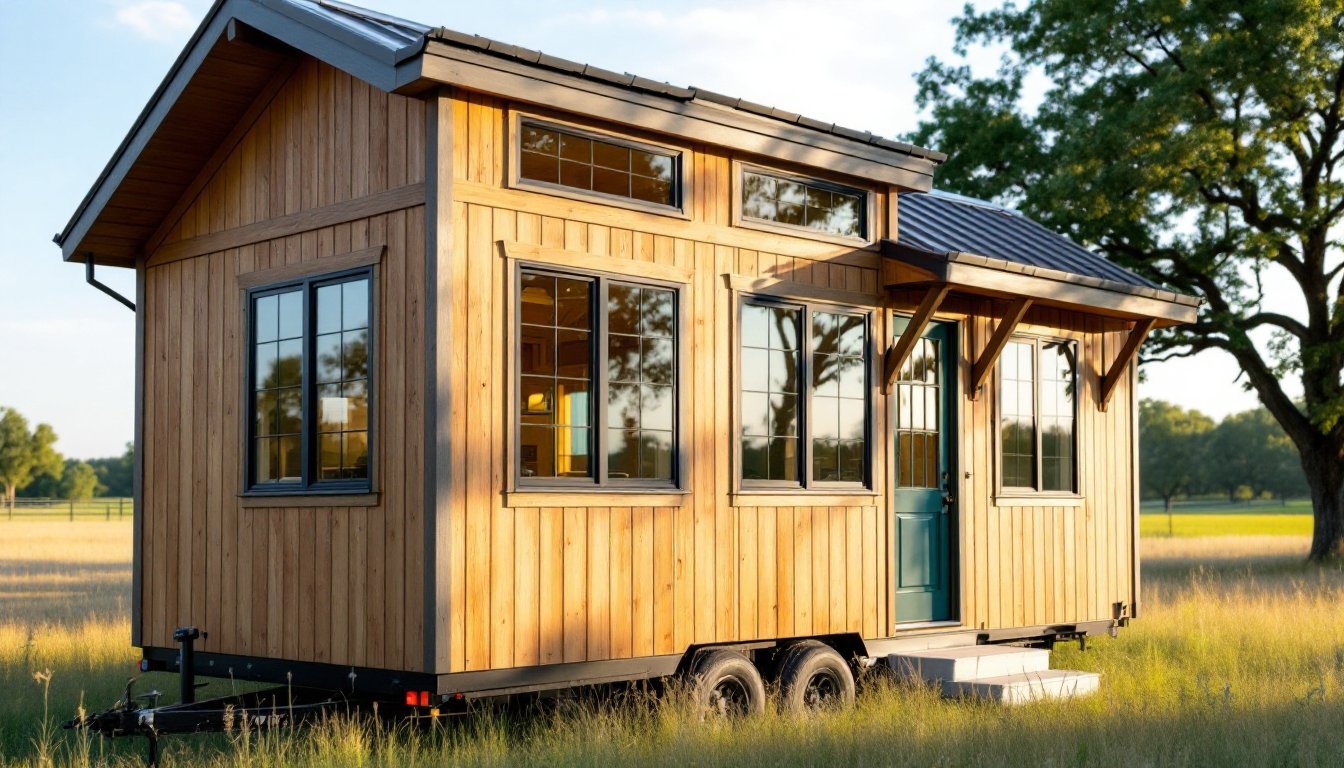
Material choices make the first big difference. Expect real hardwood flooring, not vinyl plank. Solid wood cabinetry with dovetail joints instead of particle board with cam locks. Exterior siding might be cedar shakes, board-and-batten, or metal standing seam, materials that develop patina rather than simply weathering.
Construction methods also diverge. Heirloom builders often use timber framing or advanced framing techniques (also called optimum value engineering) that reduce thermal bridging and improve insulation performance. Joinery might include mortise-and-tenon or half-lap joints where standard builds rely on screws and construction adhesive.
Weight and mobility become secondary concerns. Many heirloom tiny homes are built on permanent foundations or heavy-duty trailers not intended for frequent moves. If the structure exceeds 13,500 lbs GVWR (gross vehicle weight rating), it requires special permitting and towing equipment. That’s a trade-off: less mobility, more substance.
Finally, heirloom designs often pull from small space living strategies that emphasize quality over square footage, choosing fewer, better-made fixtures rather than cramming in cheap multifunctional furniture.
Design Philosophy: Blending Traditional Craftsmanship with Modern Minimalism
Heirloom tiny home design walks a line between Shaker simplicity and modern efficiency. The aesthetic borrows heavily from Craftsman, farmhouse, and cottage styles, think exposed beams, shiplap walls, and wrought iron hardware, while keeping layouts lean and functional.
Proportions matter. Traditional architecture relies on established ratios (like the golden ratio or classical orders) to create visual harmony. Heirloom builders apply these principles even at tiny scales: window placement follows symmetry, ceiling heights vary to define zones, and trim profiles echo historical precedent rather than looking like an afterthought.
Natural materials dominate. Reclaimed barn wood, live-edge countertops, soapstone sinks, and copper fixtures aren’t just trendy, they’re materials that improve with age. A well-maintained hardwood floor can last a century. Laminate peels in ten years.
Minimalism shows up in editing, not in cold austerity. You won’t see open shelving crammed with mismatched jars. Instead, expect built-in storage with clean lines, hidden compartments under stairs, and multipurpose furniture that doesn’t scream “space-saver.” Designers applying tiny home building techniques focus on integrating storage into the structure itself, drawer steps, toe-kick drawers, and wall cavities used for narrow pantries.
Lighting and windows receive extra attention. Heirloom designs often include more, and larger, windows than code-minimum builds, even if it complicates framing. Natural light and ventilation are prioritized to avoid the cave-like feel of some budget tiny homes.
Popular Heirloom Tiny Home Models and Floor Plans
Heirloom tiny homes don’t follow a one-size-fits-all template, but a few layouts have proven especially effective for balancing livability and craftsmanship.
The farmhouse gable: A classic pitched roof with a front porch and board-and-batten siding. Interior typically features an open great room, galley kitchen, and loft bedroom accessed by ship’s ladder or storage stairs. Total footprint often runs 20–24 feet long on a trailer or 400–500 square feet on a foundation. This layout suits builders prioritizing traditional curb appeal.
The modern cabin: Shed roof or low-slope design with large windows and clean lines. Often includes a main-floor bedroom instead of a loft, appealing to older owners or those with mobility concerns. Exterior might be metal siding, fiber cement panels, or charred wood (shou sugi ban). Square footage similar to the farmhouse, but vertical space used differently.
The cottage bungalow: Hip or cross-gable roof, wraparound porch, and divided-light windows. Interior focuses on cozy proportions, lower ceilings (7’6″–8′ instead of code-minimum 6’8″), built-in window seats, and nooks. These often land in the 300–400 square foot range and work well on permanent foundations.
Some custom builders offer luxury farmhouse designs that include high-end appliances, spa-like bathrooms, and artisan tilework, pushing square footage toward the upper end of the “tiny” definition (under 500 square feet on wheels, up to 800 square feet on a foundation, depending on local codes).
Plan selection should account for climate. A steeply pitched roof sheds snow but increases height, which may violate local restrictions. Shed roofs work well in temperate zones but require robust waterproofing.
Construction Quality and Materials That Stand the Test of Time
Material selection separates heirloom builds from disposable tiny houses. Here’s where the investment shows.
Framing: Look for 2×6 wall studs on 24″ centers instead of 2×4 on 16″ centers. The thicker walls allow for more insulation (R-21 vs. R-13) and accommodate rigid foam or mineral wool without compression. Advanced framing reduces lumber use while improving thermal performance, a win for both durability and energy efficiency.
Sheathing and siding: Exterior sheathing should be ½” or ⅝” plywood or OSB, not foam board alone. Siding options like cedar, fiber cement (HardiePlank), or metal standing seam outlast vinyl and require less maintenance. Cedar needs periodic treatment with a penetrating stain or oil: fiber cement is nearly bulletproof but heavy.
Roofing: Metal roofing (26- or 24-gauge steel) is standard for heirloom builds. Lifespan exceeds 40 years, and it sheds snow and rain efficiently. Underlayment should be synthetic (not felt) for longer life and better tear resistance during installation.
Insulation: Closed-cell spray foam is common in tiny homes for air sealing and R-value per inch (R-6 to R-7). Heirloom builders sometimes opt for mineral wool batts (Rockwool) for fire resistance and breathability, paired with a detailed air barrier using housewrap and canned foam at penetrations. Either approach works if installed correctly: the enemy is thermal bridging and air leaks.
Windows and doors: Double-pane, low-E windows are minimum. Casement windows (crank-out) seal tighter than sliders. Exterior doors should be solid core or fiberglass, not hollow core, with weatherstripping that compresses fully when closed.
Interior finishes: Real hardwood or engineered wood flooring (¾” thick) instead of luxury vinyl plank. Plaster or drywall finished smooth, not the orange-peel texture that hides poor craftsmanship. Cabinetry should feature plywood box construction, full-extension soft-close drawer slides, and solid wood face frames.
Plumbing and electrical: Use PEX or copper supply lines, not CPVC. Electrical should follow NEC (National Electrical Code) with AFCI/GFCI protection as required. If the build is on a trailer, flexible conduit and strain relief at junction boxes prevent wire fatigue from road vibration.
Many heirloom builders incorporate tiny home design ideas that blend function with aesthetics, like using reclaimed barn beams as structural elements or integrating live-edge wood into countertops.
Cost Breakdown: What to Expect When Investing in an Heirloom Tiny Home
Heirloom tiny homes cost significantly more than DIY or builder-grade models, but the investment buys longevity and craftsmanship.
Turnkey builds from established builders typically range from $80,000 to $150,000 for a tiny home on a trailer (200–400 square feet). Custom designs with high-end finishes can push past $200,000. Foundation-based builds in the 400–800 square foot range often run $150–$250 per square foot, comparable to custom small homes.
DIY costs drop substantially but require significant skill and time. Material costs for an heirloom-quality build might run $35,000–$60,000 depending on size and finish level. That assumes you’re doing framing, electrical, plumbing, and finish work yourself. Hiring out trades adds $20,000–$50,000+.
Key cost drivers include:
- Trailer: A heavy-duty dual-axle trailer (10,000–14,000 lb capacity) runs $5,000–$8,000.
- Windows and doors: Quality units cost $300–$1,200 each. A typical build needs 4–8 windows and 1–2 exterior doors.
- Roofing: Metal roofing材料 and installation: $3–$6 per square foot for materials: add labor if not DIY.
- Kitchen and bath fixtures: A farmhouse sink, quality faucet, and basic appliances can easily hit $5,000–$10,000. High-end ranges, dishwashers, and composting toilets add more.
- Cabinetry: Custom or semi-custom cabinets run $5,000–$15,000 depending on layout and materials.
- HVAC: A mini-split heat pump (ideal for tiny homes) costs $1,500–$4,000 installed.
Financing can be tricky. Many lenders won’t finance a tiny home on wheels as real estate: you may need an RV loan, personal loan, or construction loan if building on your own land. Foundation-based builds qualify for traditional mortgages if they meet local codes and minimum square footage requirements (often 400+ square feet).
When comparing tiny homes versus traditional homes, factor in land costs, utility hookups, and whether local zoning allows tiny homes as primary dwellings. Some jurisdictions classify them as accessory dwelling units (ADUs), which may require a primary residence on the same parcel.
Costs vary by region. Material and labor in the Pacific Northwest or Northeast run higher than the South or Midwest. Always budget an extra 10–15% for contingencies, especially if you’re new to construction.
Customization Options and Personalization Features
Heirloom builders typically offer deep customization, letting buyers shape the home to their needs and aesthetic preferences.
Layout modifications are common. Want a main-floor bedroom instead of a loft? Prefer a galley kitchen over an L-shape? Need a dedicated home office nook? Most builders will adjust the floor plan, though structural changes (moving windows, altering rooflines) add cost and engineering time.
Material upgrades let you dial in the look. Options include:
- Reclaimed wood accent walls or ceiling beams
- Custom tile (subway, encaustic, or handmade) in kitchen and bath
- Solid surface countertops (butcher block, soapstone, quartz, or concrete)
- Upgraded hardware (oil-rubbed bronze, unlacquered brass, or hand-forged iron)
- Exterior color and trim options (paint, stain, or natural finish)
Built-ins and storage are where heirloom builds shine. Custom features might include:
- Murphy bed or fold-down desk
- Drawer steps to the loft (each tread is a drawer)
- Built-in bookshelves, window seats, or bench seating with storage
- Hidden pantry or pull-out spice racks
- Coat hooks, mudroom cubbies, or bike storage
Appliances and systems offer room for personalization. Choose between propane or electric cooking, tankless or tank water heater, composting or RV-style toilet, and off-grid systems (solar panels, battery banks, and water catchment) if you plan to live without hookups.
Exterior details can include covered porches, pergolas, flower boxes, or custom metal roofing colors. Some buyers invest in standing seam metal in bold hues (dark bronze, forest green, or barn red) to make the home distinctive.
When pursuing customization, work closely with the builder to understand lead times and costs. Custom millwork, specialty tile, and made-to-order windows can add weeks to the build schedule. If you’re planning smart tiny home strategies for downsizing, prioritize features that genuinely improve daily living over trendy details that add cost without function.
Conclusion
Heirloom tiny homes prove that small doesn’t mean sacrificing quality or character. By prioritizing durable materials, traditional craftsmanship, and thoughtful design, these builds deliver living spaces that age gracefully and feel intentional. Whether you’re building yourself or working with a custom builder, focus on the fundamentals: solid framing, proper insulation, and finishes that will still look good in twenty years. The upfront investment pays off in longevity, comfort, and a home that truly feels like yours.