Table of Contents
ToggleFinding tiny homes on wheels for sale under $10K isn’t a pipe dream, but it requires realistic expectations and careful shopping. This price point won’t get you a Pinterest-perfect, Instagram-ready build with custom cabinetry and a farmhouse sink. What it will get you is a functional mobile shelter that can serve as a foundation for DIY upgrades, a starter home, or a debt-free living experiment. This guide breaks down what’s actually available at this price, where to find it, and the hidden costs that catch buyers off guard.
Key Takeaways
- Tiny homes on wheels for sale under $10K typically come as bare-bones shells, partial DIY builds, or used units requiring repairs, offering 100–200 square feet of functional interior space.
- Facebook Marketplace, Craigslist, and specialized sites like Tiny House Listings are the best places to find budget tiny home listings, with Facebook Marketplace emerging as the most popular platform.
- Prioritize the trailer’s condition first—checking the VIN, axle ratings, frame rust, and tire dates—since a solid foundation matters more than interior finishes.
- Hidden costs including transportation ($900–$1,500 for 300 miles), site preparation ($500–$15,000), permits ($200–$1,000), and repairs ($400–$1,200) often exceed the initial purchase price.
- DIY builds offer better long-term value if you have 200–400 hours available and basic skills, while the hybrid approach of buying a weathertight shell and finishing the interior yourself balances control with reduced risk.
- Budget-friendly tiny homes on wheels skip luxury features like composting toilets and solar systems; instead, focus on functional RV-style water systems and basic electrical that meet code requirements.
What You Can Actually Get for Under $10,000
At the sub-$10K price point, expect one of three options: a bare-bones shell on a trailer, a DIY conversion that needs finishing work, or a used unit requiring repairs.
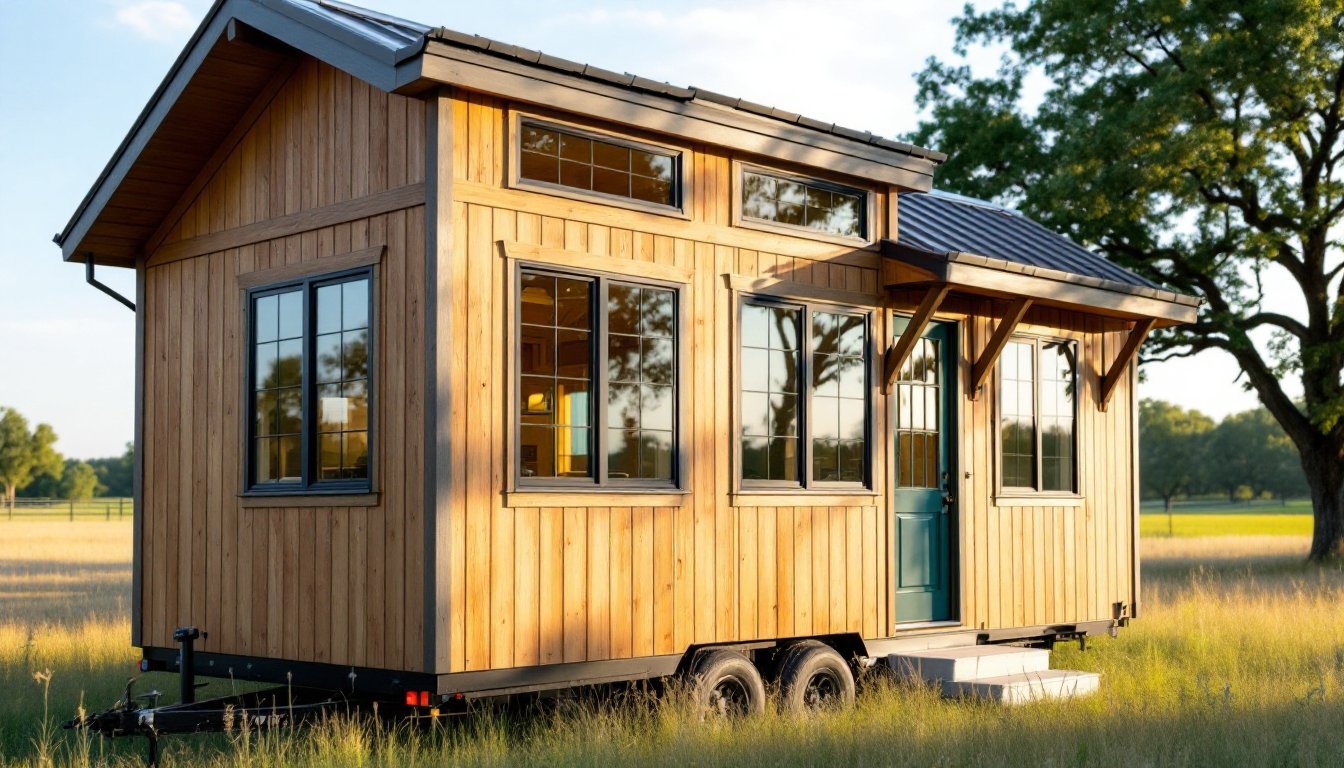
Shell builds typically include a trailer frame (often a flatbed or utility trailer), basic wall framing with sheathing, a roof structure, and maybe windows. Insulation, electrical, plumbing, and interior finishes are left to the buyer. These shells measure between 8 feet and 20 feet in length and sit on trailers rated for 3,500 to 7,000 pounds GVWR (gross vehicle weight rating). The trailer itself accounts for $1,500 to $3,000 of the total cost.
Partial DIY builds are more common in this range. Someone started the project, ran out of time or money, and is selling it as-is. You might find a unit with framing, exterior siding, a metal roof, basic electrical roughed in, but no plumbing or interior walls. These require significant finish work but save time on structural phases.
Used tiny homes under $10K often come from the 2010-2018 build era. Expect wear on flooring, dated fixtures, potential water damage around windows or roof penetrations, and tired appliances. Many were built before tiny home design standards became more refined, so layout efficiency might be lacking.
Don’t expect off-grid systems, composting toilets, or solar arrays at this price. Standard RV-style hookups (30-amp electrical, city water connection, and a basic gray/black water tank setup) are typical. Square footage ranges from 100 to 200 square feet of usable interior space.
Where to Find Tiny Homes on Wheels Under $10K
Online Marketplaces and Classified Sites
Facebook Marketplace has become the go-to platform for budget tiny home sales. Search terms like “tiny house trailer,” “THOW,” “camper conversion,” and “shed on wheels” will surface listings that traditional real estate sites miss. Filter by distance, tiny homes this affordable often aren’t worth transporting more than 200 miles given towing costs.
Craigslist still works for regional finds, particularly in the “RVs & campers” and “housing for sale” categories. Be ready to wade through cargo trailers and fifth wheels to find actual tiny homes. Check daily: good deals move fast.
Tiny House Listings (tinyhouselistings.com) and Tiny House Marketplace aggregate for-sale units nationwide. Use price filters and don’t skip the “needs work” category, that’s where the sub-$10K inventory hides. Apartment Therapy occasionally features tiny home marketplace roundups worth checking for inspiration on what’s realistic.
eBay occasionally lists tiny home shells and DIY projects, though shipping logistics make local pickup essential.
Local Builders and DIY Sellers
Small builders and weekend warriors often sell practice builds or spec projects that didn’t sell at higher price points. Search for local tiny home builder Facebook groups or visit community workshops that host tiny home build workshops.
RV and trailer repair shops sometimes take tiny homes on trade or consignment. Stop by with cash and you might find a deal before it hits online listings. Habitat for Humanity ReStores occasionally have salvaged tiny home components or even full units donated by builders.
Word-of-mouth works surprisingly well. If you’re serious about buying, tell contractors, building inspectors, and lumber yard staff you’re looking. They hear about projects stalling out before sellers post them publicly.
Essential Features to Look For (and What to Skip)
Prioritize the trailer first. Check the vehicle identification number (VIN), title status, axle ratings, tire condition (date codes on sidewalls), and frame rust. A solid trailer with good bones is worth more than fancy interior finishes. Trailers should meet minimum width and length regulations for highway travel in your state, typically 8.5 feet wide maximum without requiring oversize permits.
Inspect the roof and exterior envelope carefully. Water intrusion kills tiny homes. Look for metal roofing (lasts 30+ years) over asphalt shingles (needs replacement in 10-15 years). Check window flashing, door seals, and any roof penetrations for vents or skylights. Exterior siding should be properly fastened and sealed, loose panels mean future leaks.
Electrical systems should meet RV standards or basic residential code depending on how the unit was built. Look for a breaker panel, proper wire gauge for circuits, and GFCI protection in wet areas. If roughed-in wiring is present but incomplete, factor in $500 to $1,500 for an electrician to finish and inspect.
Skip luxury features entirely at this budget. Copper farmhouse sinks, reclaimed wood accents, and built-in furniture are nice but not essential. You can add those over time as budget allows. Similarly, high-end composting toilets ($1,000+), on-demand water heaters, and solar systems push well beyond $10K project scope.
Functional plumbing beats pretty fixtures. If the unit has a working RV-style water system with holding tanks, that’s enough. You can upgrade faucets and add a shower later. Design ideas for maximizing function can be incorporated after you’re living in it.
Check for certification or compliance. Some jurisdictions require RVIA (RV Industry Association) certification or compliance with local building codes. If the tiny home lacks certification, confirm whether it’s legal to park where you intend to use it.
Hidden Costs You Need to Budget For
Transportation is the first surprise expense. Towing a tiny home requires a heavy-duty truck (typically 3/4-ton or 1-ton with appropriate towing capacity) and potentially a commercial towing service. Costs run $3 to $5 per mile for professional transport, meaning a 300-mile move adds $900 to $1,500. If you don’t own a capable tow vehicle, rentals run $150 to $300 per day plus mileage and fuel.
Site preparation and hookups vary widely by location. RV parks charge $300 to $800 monthly for a space with electrical, water, and sewer. Private land requires establishing utilities, running electric service from a pole costs $500 to $2,000 depending on distance, while well and septic systems can hit $5,000 to $15,000. Many buyers overlook that tiny home placement strategies significantly impact total project cost.
Permits and inspections depend on jurisdiction. Some counties classify tiny homes on wheels as RVs (minimal permitting), while others treat them as permanent structures (full building permits required). Budget $200 to $1,000 for various permits and inspection fees. If the structure wasn’t built to code, bringing it into compliance costs extra.
Insurance is mandatory if you finance or need liability coverage. RV-style policies run $400 to $800 annually for basic coverage. Standard homeowners insurance won’t cover a mobile structure.
Immediate repairs on used units typically include new tires ($400 to $800 for a set), fresh caulking and weatherproofing ($100 to $300 in materials), and minor plumbing or electrical fixes ($200 to $600). Resources from HGTV show average repair costs for similar-sized mobile structures.
Finish work on shell or partial builds requires material investment. Budget $2,000 to $5,000 for basic interior finishing including subfloor, insulation, drywall or paneling, flooring, and paint. Appliances (mini fridge, two-burner cooktop, apartment-size washer) add another $800 to $1,500.
DIY vs. Pre-Built: Which Gets You More Value?
At the sub-$10K price point, DIY builds offer better long-term value if you have time and basic skills. Buying a quality trailer and framing materials yourself gives you control over quality and allows you to avoid someone else’s shortcuts or mistakes. Expect to invest 200 to 400 hours for a basic weathertight shell with rough-in systems.
Material costs for a DIY shell break down roughly as follows: trailer ($2,000 to $3,500), framing lumber and sheathing ($1,200 to $2,000), roofing ($400 to $800), windows and door ($600 to $1,200), insulation ($300 to $600), and exterior siding ($800 to $1,500). That totals $5,300 to $9,600 in materials alone, leaving little budget for interior finishes or systems.
Pre-built units under $10K save massive amounts of time but come with unknowns. Unless you can thoroughly inspect the build quality, checking fastener types, proper flashing installation, electrical connections, and structural integrity, you’re gambling on someone else’s workmanship. Many budget builds use substandard materials or skip steps that cause problems later. Current tiny home trends in 2026 show buyers increasingly favor documented builds with known material sources.
Tool investment matters for DIY. You’ll need a circular saw or miter saw ($100 to $300), cordless drill and impact driver ($150 to $250), level and square ($50 to $100), and basic hand tools ($100 to $200). If you don’t own these, factor in $400 to $850, though they’re useful for future projects.
Skill requirements for DIY include basic carpentry (cutting studs, nailing framing, installing sheathing), understanding building envelope principles (air and moisture barriers), and comfort with electrical and plumbing rough-ins. YouTube tutorials and comprehensive tiny home guides have lowered the knowledge barrier, but structural work still benefits from help. Recruit a friend with framing experience for key phases.
Pre-built makes sense when you lack workshop space, can’t dedicate months to a build, or find a well-documented unit from a reputable seller. Request build photos, material receipts, and any inspection records. Verified examples of budget builds on community forums show what quality looks like at this price.
The middle path, buying a weathertight shell and finishing the interior yourself, often provides the best risk-to-reward ratio. You avoid the most technically challenging structural work while maintaining control over livability features. According to Curbed, this hybrid approach has grown 40% in popularity since 2024 among first-time tiny home buyers working within tight budgets.