Table of Contents
ToggleRaleigh’s skyline isn’t just growing upward, it’s shrinking down. Tiny homes have carved out a niche in the Triangle, blending Southern charm with modern minimalism. From custom-built cottages tucked in wooded lots to sleek modular units in planned communities, the downsized living movement is visible across Wake County. This visual tour walks through real examples of tiny living in Raleigh, from exteriors that make neighbors do a double-take to interiors that prove 400 square feet can hold more life than most 2,000-square-foot McMansions.
Key Takeaways
- Tiny homes in Raleigh offer a 60-80% cost reduction compared to conventional housing, making them an accessible alternative as median home prices exceed $400,000.
- Raleigh’s tiny home photos showcase intentional design with high ceilings (10-13 feet), whitewashed interiors, and vertical storage solutions that maximize functionality in under 400 square feet.
- Wake County’s updated zoning ordinances now permit accessory dwelling units (ADUs) and tiny homes on standard residential lots, though placement rules and setback requirements still apply.
- Professional tiny home builds in the Raleigh area range from $70,000 to $120,000 with custom finishes, while utility costs remain minimal at $50-$100 monthly for well-insulated units.
- The region’s mild climate, parks, and cultural amenities make tiny living sustainable year-round, with mini-split HVAC systems efficiently managing Raleigh’s temperate conditions.
Why Tiny Homes Are Taking Root in the Raleigh Area
The Raleigh metro’s housing market has pushed median home prices above $400,000, making traditional homeownership a stretch for first-time buyers, retirees on fixed incomes, and remote workers relocating from pricier markets. Tiny homes, typically defined as dwellings under 400 square feet, offer a workaround that cuts both upfront costs and long-term expenses.
Wake County’s zoning has gradually opened doors for accessory dwelling units (ADUs) and tiny home placements on standard residential lots, though restrictions still apply. The city of Raleigh updated its Unified Development Ordinance in recent years to allow ADUs in more residential districts, provided they meet setback requirements and utility hookups. This shift has encouraged homeowners to add tiny units as rental income sources or multigenerational housing.
Beyond affordability, the region’s mild climate supports tiny living year-round. Winters rarely dip below freezing for extended periods, reducing heating demands. Summers require robust cooling, but a mini-split HVAC system (common in tiny homes) handles the load efficiently in small spaces. The Triangle’s network of parks, greenways, and cultural amenities also means tiny dwellers don’t sacrifice access to recreation or community.
Photos from local builds reveal a common thread: intentionality. These aren’t makeshift cabins or glorified sheds. Owners invest in sustainable building practices like spray foam insulation, dual-pane windows, and metal roofing rated for 50-year lifespans. The aesthetic leans modern farmhouse or contemporary, with board-and-batten siding, black-framed windows, and standing-seam metal roofs dominating the visual language.
Stunning Tiny Home Exterior Designs in Raleigh
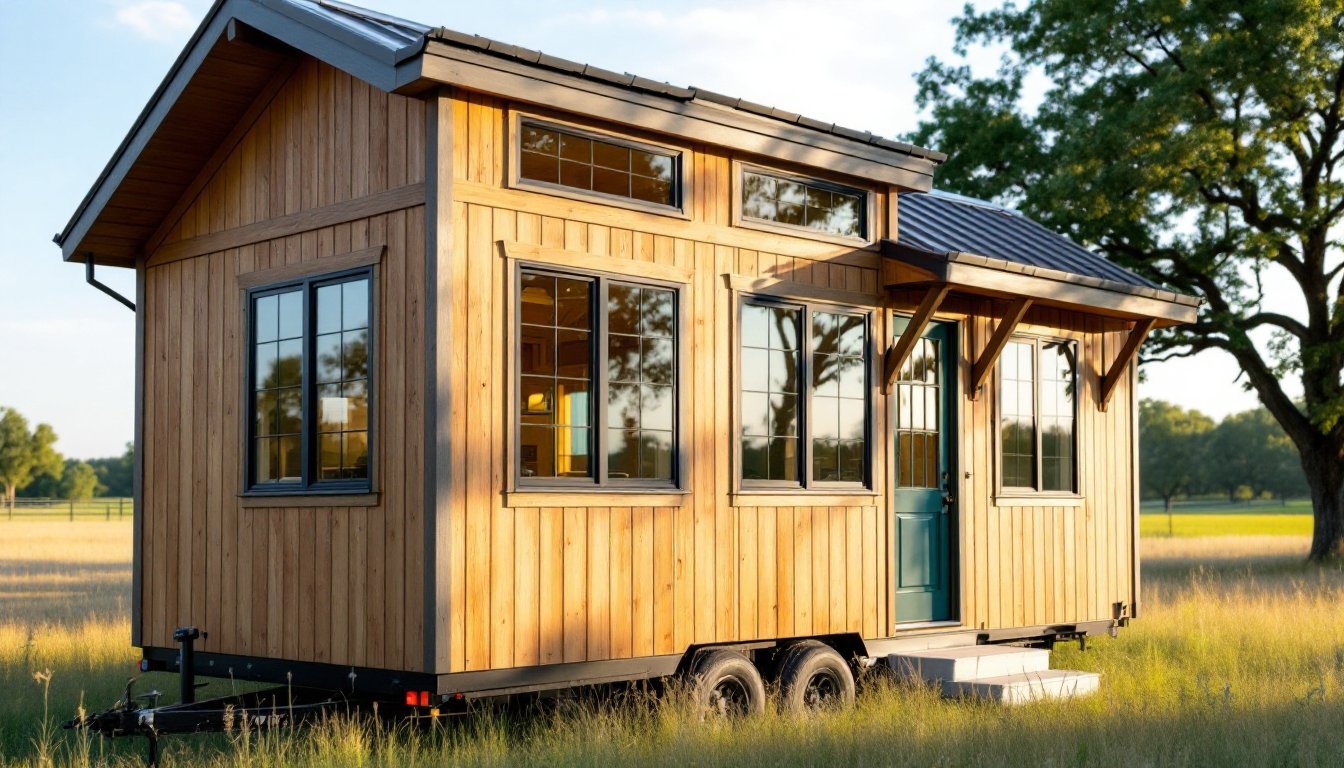
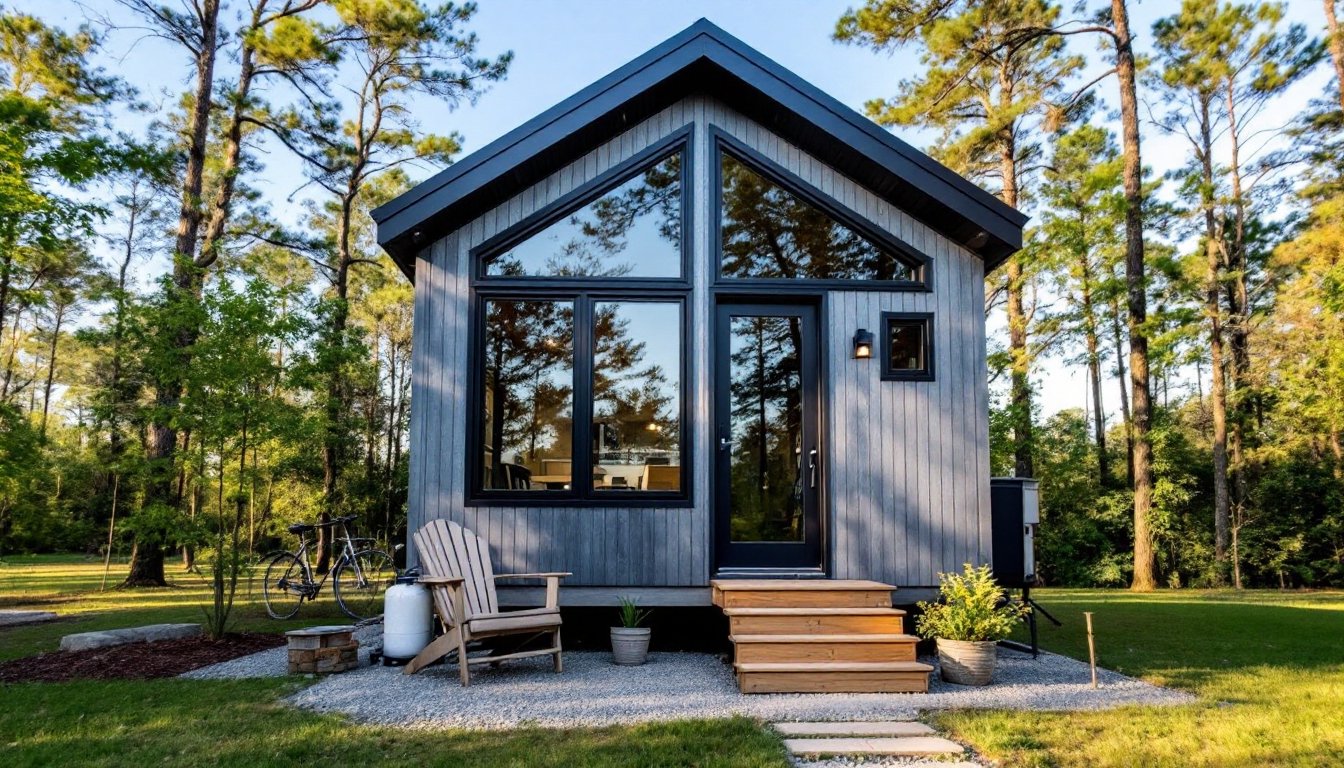
Raleigh’s tiny home exteriors don’t apologize for their size. Builders emphasize clean lines, durable materials, and curb appeal that rivals full-scale homes. Cedar shiplap siding with a clear or semi-transparent stain is a popular choice, aging to a silver-gray patina that blends with the region’s wooded lots. Paired with charcoal or matte black trim, the look reads understated but deliberate.
One standout example featured in a Dwell profile showcases a 240-square-foot unit clad in corrugated metal panels and reclaimed barn wood. The gabled roof extends over a covered porch, creating usable outdoor space that visually doubles the home’s footprint. Oversized windows, often placed strategically to capture southern light while minimizing western heat gain, bring the outdoors in without sacrificing wall space for cabinetry.
Foundation choices vary. Some builds rest on concrete piers, which satisfy local code for permanent structures and avoid the permitting headaches of trailers. Others use steel chassis and remain classified as RVs, though this limits placement options within city limits. Pier-and-beam foundations elevate the structure 12 to 18 inches, improving drainage and deterring pests, a must in North Carolina’s humid climate.
Exterior storage gets creative attention. Photos reveal integrated bike racks, fold-down tool lockers beneath porches, and wall-mounted propane tank enclosures disguised as decorative panels. Even the smallest builds include a covered entryway, protecting the door threshold from weather and providing a mudroom buffer. Composite decking in shades of gray or brown extends living space outdoors, often doubling as a dining or workspace zone during temperate months.
Inside Raleigh’s Most Impressive Tiny Home Interiors
Step inside, and the visual weight shifts. High ceilings, often 10 to 13 feet at the peak, prevent the claustrophobia that sinks poorly designed small spaces. Whitewashed pine or poplar shiplap clads walls and ceilings, reflecting light and making the interior feel twice its actual square footage. Builders avoid dark stains or heavy textures that shrink perceived space.
Kitchens anchor most layouts. Full-size appliances aren’t sacrificed: 24-inch ranges (often propane), apartment-sized refrigerators (10 to 12 cubic feet), and undermount stainless sinks fit snugly into galley configurations. Butcher-block counters or quartz slabs in light tones provide prep space, while open shelving replaces upper cabinets to maintain sightlines. One Raleigh build incorporates a fold-down dining table hinged to the kitchen peninsula, seats four when deployed, disappears flat against the wall when not in use.
Loft bedrooms handle sleeping quarters, accessed by ladder, staircase, or storage stairs (steps that double as drawers). Standard loft clearance hovers around 36 to 42 inches, enough to sit up but not stand. Full-height sleeping areas require a second loft or ground-floor bedroom, which eats into living space. Photos reveal low-profile mattresses (6 to 8 inches thick) on platform bases, eliminating the need for box springs.
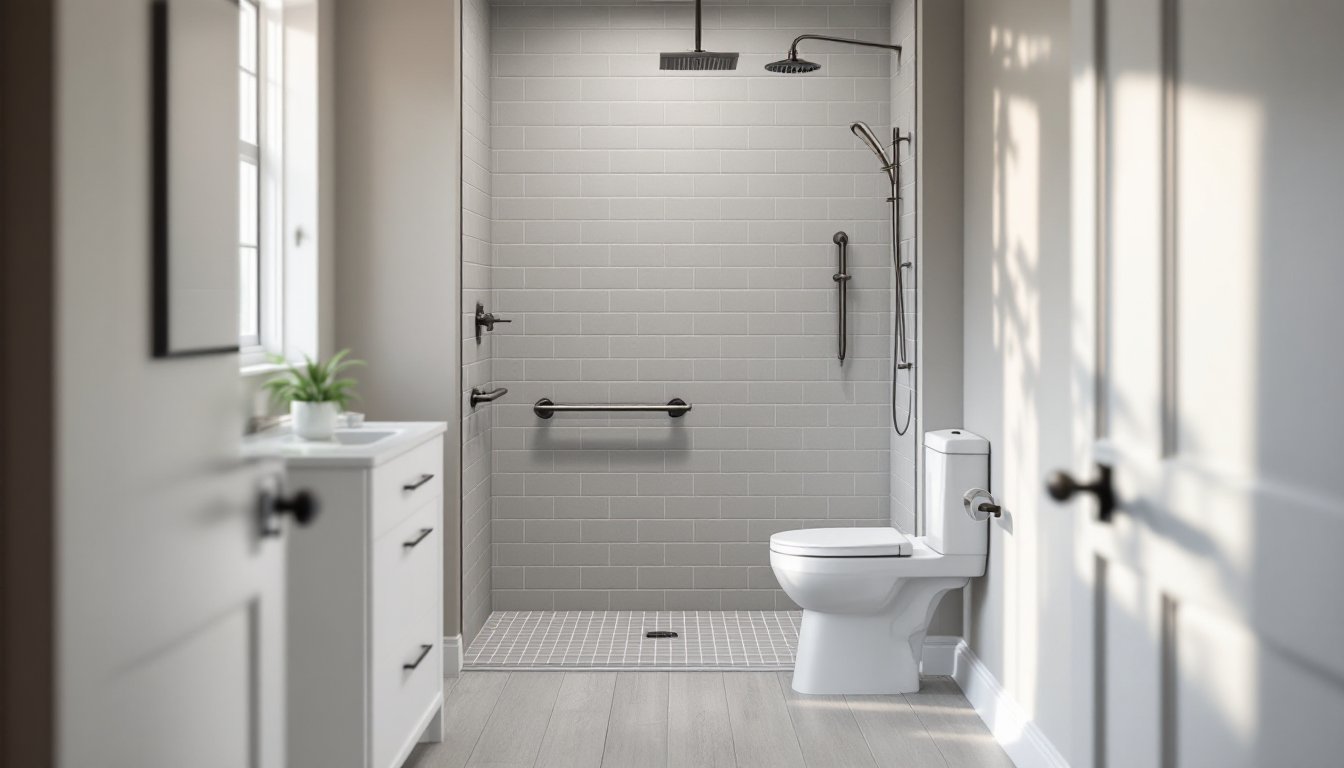
Bathrooms lean minimalist but functional. Tiled walk-in showers with frameless glass doors replace tubs. Composting toilets appear in off-grid builds, while city-connected units use standard flush toilets linked to municipal sewer or septic systems. Vanity sinks often sit atop custom cabinets housing water heaters or washer-dryer combos, dual-purpose design at its finest.
Clever Storage Solutions Captured in Local Tiny Homes
Storage defines success in tiny living. Raleigh’s best interiors show what’s possible when every cubic inch earns its keep.
Under-stair storage dominates. Staircase treads lift to reveal compartments for shoes, linens, or pantry overflow. One unit features a full-height closet carved beneath the staircase, complete with hanging rod and shelves.
Built-in furniture eliminates gaps. Platform beds integrate nightstands and drawers directly into the frame. Window seats conceal storage bins beneath hinged tops. Murphy beds fold into wall units, exposing desks or shelving when stowed.
Vertical space gets maxed out. Ceiling-mounted pot racks suspend cookware. Wall-mounted bike hooks, pegboards for tools, and magnetic knife strips keep floors clear. Floating shelves run corner to corner, displaying books or plants without blocking windows.
Hidden mechanicals preserve aesthetics. Water heaters tuck into bench seats. HVAC mini-splits mount flush in soffits. Electrical panels hide behind framed mirrors. The result: interiors that photograph like design magazine features, not RV catalogs.
Material choices lean toward light woods, maple, birch, or ash, finished with water-based polyurethane for durability without yellowing. Hardware stays minimal: brushed nickel or matte black pulls, inset hinges, and touch-latch cabinets that skip handles entirely. The photos reveal a consistent design ethos: modern simplicity over rustic clutter.
Tiny Home Communities and Locations Around Raleigh
While scattered individual builds dot the Triangle, organized tiny home communities remain rare compared to markets like Austin or Portland. Zoning hurdles and infrastructure requirements slow development, but a few pockets have emerged.
Privately owned RV parks in Garner and Apex accommodate tiny homes on wheels, though amenities vary. These setups typically include water, electric, and sewer hookups, but residents must navigate RV classification rules and park-specific covenants. Monthly lot fees range from $400 to $700, a fraction of apartment rent but with less security of tenure.
Co-housing projects in Durham and Chapel Hill have incorporated tiny units as part of intentional communities. These developments prioritize shared spaces, community gardens, tool libraries, and common dining halls, reducing the need for oversized private dwellings. Expect stricter governance and higher buy-ins, but stronger social infrastructure.
Backyard ADUs constitute the majority of tiny homes in Raleigh proper. Homeowners add units behind primary residences, either for rental income or family use. These require building permits, inspections, and compliance with setback regulations (typically 5 feet from side and rear property lines). Photos from local builds show units that mirror the main house’s style, maintaining neighborhood aesthetics.
Rural Wake and Johnston Counties offer more flexibility. Unrestricted county parcels allow tiny homes as primary dwellings, provided they meet minimum square footage requirements for septic permits (often 120 square feet of living space). Off-grid builds in these areas feature solar arrays, rainwater catchment, and composting systems, visible in photos as rooftop panels and elevated water tanks.
No dedicated tiny home villages exist yet, though developers have floated proposals. The regulatory environment remains patchwork: what’s permitted in Raleigh may violate Cary’s codes, and county rules differ again. Always verify local ordinances before committing to a location.
What These Photos Reveal About Tiny Living Costs in Raleigh
Photos hint at budgets. A DIY trailer-based build with reclaimed materials and basic finishes might clock in around $30,000 to $50,000. Professional builds with custom cabinetry, high-end appliances, and premium siding start at $70,000 and climb past $120,000 for turnkey delivery.
Permanent foundation tiny homes, those on piers or slabs, add site prep and utility connection costs. Expect $5,000 to $15,000 for grading, foundation work, and trenching for water, sewer, and electric lines. If the lot lacks existing utilities, well drilling ($8,000 to $12,000) and septic installation ($5,000 to $10,000) push totals higher.
Material choices visible in photos telegraph spending. Vinyl siding and laminate counters signal budget builds. Fiber cement siding (like HardiePlank), quartz counters, and metal roofing indicate mid-tier investment. Custom millwork, spray foam insulation, and high-efficiency windows point to premium budgets.
Ongoing costs stay low. Utility bills for a well-insulated 300-square-foot home average $50 to $100 monthly. Property taxes on an ADU add incrementally to the main home’s assessment, often $200 to $600 annually, depending on county rates. Insurance varies: some providers classify tiny homes as RVs (cheaper premiums but limited coverage), while others treat them as secondary dwellings (higher premiums, better protection).
Photos of solar-equipped units suggest $10,000 to $20,000 investments in off-grid systems, 3 to 5 kW arrays with battery backup. These setups eliminate electric bills but require maintenance and eventual battery replacement (every 10 to 15 years).
Financing remains tricky. Traditional mortgages don’t apply to structures under 400 square feet or those on trailers. Personal loans, RV loans, or construction loans fill the gap, often at higher interest rates (6% to 10%). Some owners pay cash, leveraging home equity or savings. Photos of high-end finishes typically indicate liquid capital or unconventional financing.
Compared to conventional housing costs, tiny homes in Raleigh cut purchase prices by 60% to 80%, but they don’t eliminate housing expenses. Land acquisition, permitting, and ongoing maintenance still apply. The photos that look professionally staged? Those represent serious financial commitment, not just frugality.
Finding Your Own Tiny Home Inspiration in the Triangle
Raleigh’s tiny home scene remains niche but visible. Start with local builder portfolios and open-house events, several Triangle-based contractors specialize in small-scale residential work and showcase completed projects.
Social media surfaces real builds. Instagram hashtags like #RaleighTinyHome or #TriangleTinyLiving connect to DIYers documenting projects. Facebook groups for North Carolina tiny home enthusiasts swap photos, vendor recommendations, and permitting advice. Expect unfiltered reality alongside aspirational shots.
Zoning research comes first. Before falling for a design, confirm your intended lot allows it. Raleigh’s Planning and Development department offers zoning maps and staff consultations. County offices in Wake, Durham, and Johnston provide similar resources. Bringing photos of target designs to these meetings helps clarify what’s feasible.
Material sourcing benefits from local options. Builders Firstsource, 84 Lumber, and local sawmills supply framing lumber, siding, and trim. Habitat for Humanity ReStores stock reclaimed materials visible in budget builds, barn wood, vintage fixtures, and salvaged windows. For specialty items like mini-split HVAC units or composting toilets, online retailers (Amazon, Home Depot) deliver to the Triangle within days.
DIY vs. hiring out depends on skills and time. Framing, roofing, and rough-in electrical/plumbing suit experienced DIYers with helpers. Finish carpentry, tile work, and system hookups often justify hiring pros, mistakes cost more to fix than getting it right the first time. If going full DIY, budget 500 to 800 hours for a basic shell-to-finish build.
Permitting timelines vary. Raleigh’s process for ADUs runs 4 to 8 weeks for plan review and approval. Inspections (footing, framing, rough-in, final) space out over the build, adding weeks between stages. County jurisdictions may move faster or slower depending on staff workload.
Photos inspire, but boots-on-the-ground research closes the gap between Pinterest boards and livable space. Visit completed tiny homes when possible, many owners welcome tours by appointment. Touch the finishes, open the cabinets, climb the ladder. The best education comes from seeing how thoughtful design choices translate into daily living.