Table of Contents
ToggleMississippi’s combination of affordable land, mild winters, and rural character makes it one of the most practical states for tiny home living. But before you tow in a dwelling or pour a foundation, you need to navigate building codes, zoning laws, and climate considerations that differ significantly from other regions. This guide walks through the legal groundwork, location scouting, costs, and design strategies that turn a tiny home from a concept into a permitted, livable structure in Mississippi.
Key Takeaways
- Mississippi’s affordable land ($2,000–$4,000 per acre) and mild winters make tiny home living economically practical compared to high-cost states like Colorado and Oregon.
- Zoning regulations for tiny homes in Mississippi vary by county and municipality—confirm minimum dwelling size, ADU allowances, and RV restrictions with your county planning office before purchasing land.
- Building permits for permanent tiny home foundations require approvals for structure, electrical, plumbing, and septic systems; temporary structures parked on wheels face legal gray areas if occupied beyond 180 days.
- Mississippi’s hot, humid summers demand closed-cell spray foam insulation, metal roofing, mini-split heat pumps, and dehumidifiers to prevent moisture damage and maintain comfort in small spaces.
- DIY tiny home construction in Mississippi costs $20,000–$50,000 while professional builds range $50,000–$80,000; financing typically requires personal loans, RV loans, or cash savings since traditional mortgages rarely cover homes under 400 square feet.
- Tishomingo, Pike, and Choctaw counties offer the best combination of low land prices, minimal zoning enforcement, and suitable climates for tiny homes, while coastal and major urban areas enforce stricter building codes.
Why Mississippi Is Perfect for Tiny Home Living
Land prices in Mississippi sit well below the national average. Rural acreage routinely sells for $2,000 to $4,000 per acre in counties like Attala, Jasper, and Winston, compared to $10,000+ per acre in states like Colorado or Oregon. That pricing opens the door for buyers who want a small footprint on a larger lot, room for gardens, workshops, or simply privacy.
The state’s climate also works in favor of tiny homes. Winters are short and mild, with January lows averaging 35°F to 40°F across most of the state. Heating demands stay manageable with mini-split heat pumps or small propane furnaces. Summers are hot and humid, but proper insulation, ridge vents, and AC units sized for 200 to 400 square feet keep interiors comfortable without consuming excessive power.
Mississippi’s rural culture is another advantage. Many counties operate with minimal building inspection staff, and small, owner-built structures often receive less scrutiny than they would in urban jurisdictions. That doesn’t mean codes don’t apply, it means enforcement tends to be complaint-driven rather than proactive. Neighbors who see a neat, well-maintained tiny home on a tidy lot are less likely to raise objections.
Understanding Mississippi’s Tiny Home Laws and Zoning Regulations
Mississippi doesn’t have statewide tiny home legislation. Regulation happens at the county and municipal level, which creates a patchwork of rules. Some counties allow accessory dwelling units (ADUs) on parcels zoned agricultural or residential, while others require structures to meet minimum square footage requirements, often 600 to 800 square feet for permanent dwellings.
Zoning classifications matter. If a tiny home is classified as a recreational vehicle (RV), it may be restricted to RV parks or campgrounds and prohibited as a primary residence. If it’s classified as a permanent dwelling, it must meet the International Residential Code (IRC), which Mississippi adopts with local amendments. That means foundation requirements, egress windows, ceiling height minimums (6’8″ in living areas, 6’4″ in bathrooms and kitchens), and electrical work compliant with the National Electrical Code (NEC).
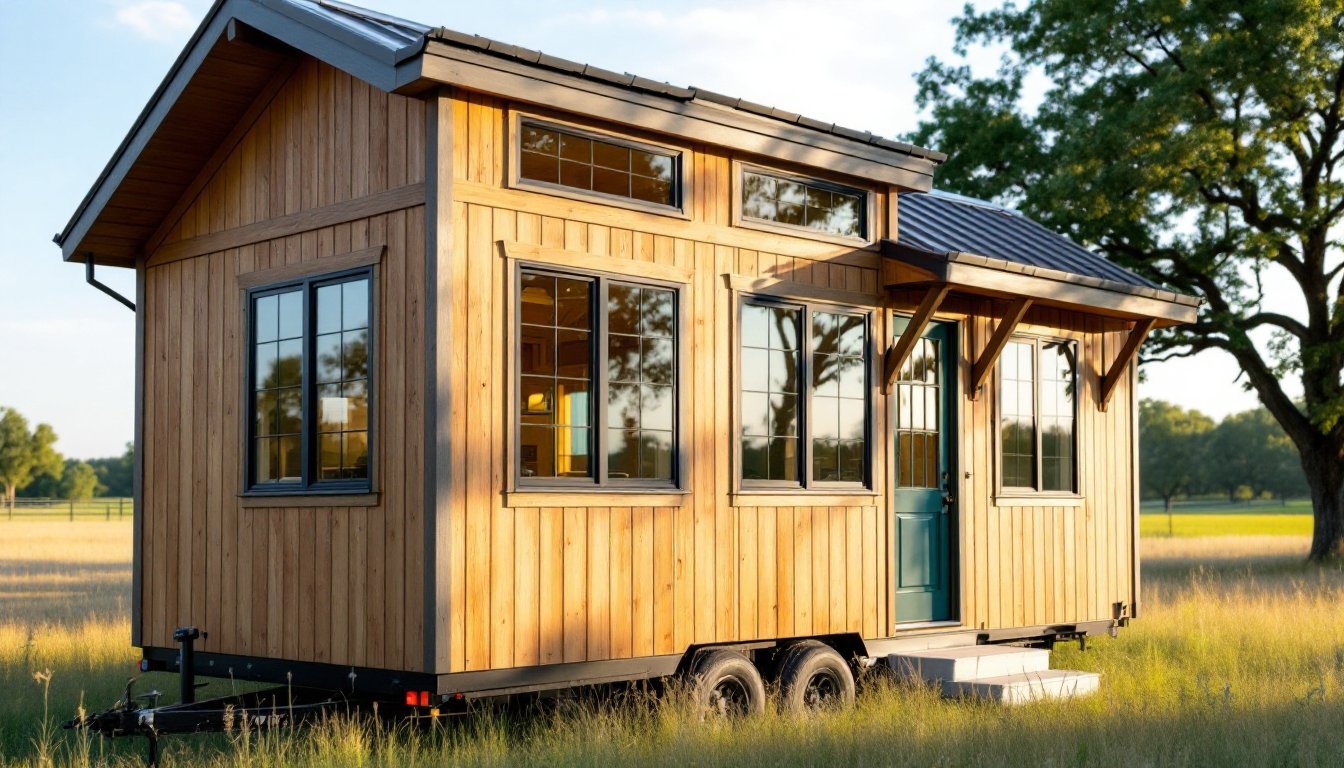
Some builders explore tiny home design strategies that involve parking a tiny home on wheels (THOW) on private land as a temporary structure. This approach can sidestep permanent dwelling codes, but it’s legally gray. If the structure remains in place for more than 180 days, many jurisdictions treat it as a permanent residence and require compliance with local codes.
Building Codes and Permits You Need to Know
If you’re building a tiny home on a permanent foundation in Mississippi, expect to pull permits for:
- Building permit: Required for any new structure. Application includes site plans, foundation details, and framing drawings.
- Electrical permit: All wiring must be inspected and signed off by a licensed electrician or the local building official.
- Plumbing permit: Necessary if connecting to municipal water/sewer or installing a septic system.
- Septic permit: Issued by the Mississippi State Department of Health if you’re installing an on-site wastewater system. Soil percolation tests are required.
Tiny homes on wheels (THOWs) certified by the Recreational Vehicle Industry Association (RVIA) may bypass some local building codes, but they’re still subject to zoning restrictions. Many counties prohibit full-time occupancy of RVs outside designated parks. Check with your county planning department before purchasing or moving a THOW onto your property.
Foundation requirements vary by county. Permanent tiny homes typically need either a slab, crawl space, or pier-and-beam foundation. Frost line in Mississippi is shallow, 12 inches in the north, even less in the south, so footings don’t need to go deep. Piers spaced 6 to 8 feet apart with treated 4×6 or 6×6 beams work well for tiny structures under 10,000 pounds.
Best Locations in Mississippi for Placing Your Tiny Home
Counties with minimal building codes and affordable land tend to be the best bets. Tishomingo County, in the far northeast, offers rolling hills, proximity to the Natchez Trace Parkway, and relatively hands-off zoning enforcement. Land parcels of 5 to 10 acres are common and reasonably priced.
Pike County, near the Louisiana border, provides similar advantages with slightly warmer winters and access to Amite and Tangipahoa river systems. The county seat, McComb, has basic services without big-city zoning headaches.
Choctaw County in the central part of the state is another strong option. It’s lightly populated, with fewer than 9,000 residents across 420 square miles. Zoning regulations are minimal outside the small towns, and land prices remain low. The county allows agricultural structures and ADUs on most rural parcels.
Avoid placing a tiny home in Jackson, Gulfport, or Biloxi without consulting local planning departments first. These municipalities enforce stricter minimum square footage requirements, often 700 to 1,000 square feet for single-family residences. Coastal counties like Hancock and Harrison also have stringent building codes due to hurricane risk.
If you’re buying land, confirm zoning with the county clerk or planning office before closing. Ask specifically about minimum dwelling size, ADU allowances, and whether the parcel allows RVs or manufactured homes. Some counties lump tiny homes into the manufactured housing category, which can trigger different setback and foundation rules. For more guidance, consider exploring tiny home building techniques before selecting a site.
Costs and Financing Options for Tiny Homes in Mississippi
A DIY tiny home build in Mississippi typically costs between $20,000 and $50,000, depending on size, materials, and finishes. That estimate includes a trailer (if building a THOW), framing lumber, insulation, windows, doors, roofing, siding, and basic electrical and plumbing systems.
Breakdown for a 20-foot THOW:
- Trailer: $4,500 to $6,500 (dual-axle, 10,000 lb capacity)
- Framing lumber: $2,000 to $3,000 (2×4 studs, 2×6 floor joists, treated sill plates)
- Insulation: $800 to $1,200 (closed-cell spray foam or rigid foam board)
- Windows and doors: $1,500 to $2,500
- Roofing: $600 to $1,000 (metal or architectural shingles)
- Siding: $1,200 to $2,000 (LP SmartSide, corrugated metal, or cedar)
- Electrical: $1,000 to $1,800 (wire, breaker panel, outlets, fixtures)
- Plumbing: $800 to $1,500 (PEX supply lines, tankless water heater, composting toilet or RV toilet)
- Interior finishes: $3,000 to $6,000 (flooring, cabinetry, countertops, paint)
Hiring a builder adds 50% to 100% to material costs. Expect to pay $50,000 to $80,000 for a professionally built tiny home in Mississippi.
Financing a tiny home is trickier than financing a traditional house. Most banks won’t write a mortgage for a structure under 400 square feet or one built on a trailer. Options include:
- Personal loans: Unsecured loans with higher interest rates (8% to 12%) but no collateral requirement.
- RV loans: Available if the tiny home is RVIA-certified. Rates run 5% to 9%, with terms up to 15 years.
- Home equity loans or HELOCs: If you already own property, you can borrow against it to fund the tiny home.
- Cash: The most common approach. Many builders save up or sell existing assets to fund construction.
Some credit unions in Mississippi, including Keesler Federal Credit Union and BankPlus, offer flexible personal loans that work for tiny home projects. Shop around and be transparent about the intended use. Land purchase can be financed separately through a land loan, which typically requires 20% to 30% down and carries higher rates than a traditional mortgage. If you’re just starting out, tiny homes for beginners covers financing fundamentals in more depth.
Design and Customization Tips for Mississippi’s Climate
Mississippi’s climate demands attention to moisture control, ventilation, and insulation. Summers are hot and humid, with highs reaching 90°F to 95°F and relative humidity often topping 70%. Winters are mild but damp. Design choices should prioritize airflow, dehumidification, and thermal breaks.
Insulation: Use closed-cell spray foam in walls and ceilings for an R-value of at least R-13 in walls and R-30 in the roof. Spray foam also acts as a vapor barrier, which is critical in humid climates. Avoid fiberglass batts unless you pair them with a continuous vapor barrier and ventilated cavities, moisture infiltration leads to mold.
Roofing: Metal roofing outperforms shingles in Mississippi. It sheds rain faster, resists moss and algae, and reflects heat. Use a light color (white, tan, or light gray) to reduce solar heat gain. Install a ridge vent and soffit vents to allow hot air to escape from the attic or loft space.
Windows: Double-pane, low-E windows with argon fill cut heat transfer and reduce condensation. Place windows on north and south walls to maximize cross-ventilation. Awning-style windows can stay open during rain, which is common in Mississippi. Avoid oversized west-facing windows, they let in harsh afternoon sun.
HVAC: A mini-split heat pump is the best all-in-one solution for tiny homes. Units rated for 9,000 to 12,000 BTU handle 200 to 400 square feet comfortably. Install the indoor head high on a wall, away from direct sun. Supplement with a ceiling fan to circulate air. If you’re off-grid, a small window AC unit (5,000 BTU) paired with a propane heater works but requires more manual adjustment.
Moisture control: Install a dehumidifier rated for at least 30 pints per day. Empty the reservoir daily or run a drain line to the exterior. Moisture buildup in a tiny home happens fast, cooking, showering, and even breathing add humidity. Exhaust fans in the kitchen and bathroom are non-negotiable. Vent them to the exterior, not into the attic or wall cavities.
Exterior materials: LP SmartSide, fiber cement siding (like Hardie), or corrugated metal all hold up well in Mississippi’s climate. Avoid raw wood siding unless you’re prepared to seal and maintain it annually. Termites are active year-round in the state, so treat all lumber in contact with the ground and consider borate-treated sheathing.
Foundation and underbelly: If building on a trailer, seal the underbelly with a moisture barrier. Rodents and insects will exploit any gaps. Use galvanized flashing around the perimeter and seal penetrations with spray foam. If building on piers, enclose the crawl space with lattice or solid skirting and install vent screens.
For layout ideas and climate-specific tweaks, creative tiny home ideas from other builders offer plenty of inspiration. Many small-space designs featured on Apartment Therapy emphasize ventilation and material durability, both of which apply directly to Mississippi builds.
Conclusion
Mississippi offers some of the best conditions in the country for tiny home living, affordable land, a mild climate, and flexible rural zoning. But success hinges on doing the assignments upfront: confirming zoning, pulling the right permits, and designing for heat and humidity. Take the time to visit county offices, talk to builders who’ve worked in your target area, and plan your systems before breaking ground. A well-executed tiny home in Mississippi isn’t just legal, it’s comfortable, durable, and built to last.