Table of Contents
ToggleFinding tiny brown bugs with wings crawling or flying around your home isn’t just annoying, it’s a sign something needs attention. These small invaders often appear in clusters near windows, lights, or pantry shelves, and many homeowners struggle to identify them without magnification. The good news? Most of these pests are manageable with the right approach. This guide walks through the most common culprits, why they’re in your house, and how to eliminate them before they become a bigger problem.
Key Takeaways
- Tiny brown bugs with wings in your house are commonly carpet beetles, drugstore beetles, fruit flies, or fungus gnats, each requiring different identification and treatment approaches based on their behavior and location in your home.
- Eliminating tiny brown flying bugs requires a three-step strategy: identify and remove the source, clean thoroughly and seal entry points with weatherstripping or caulk, then apply targeted treatments like pheromone traps or diatomaceous earth.
- Overwatered houseplants, fermenting fruit, stored dry goods, and moisture sources like leaky pipes are the primary attractants; removing these sources is essential since pesticides alone won’t solve the problem without addressing the root cause.
- Carpet beetle larvae damage natural fibers in closets and under furniture, while pantry beetles can chew through cardboard packaging and multiply in just 6-8 weeks, making quick identification and action critical.
- Store groceries in airtight glass or plastic containers, inspect items before bringing them indoors, and maintain a quarterly pantry cleanout routine to catch infestations early and prevent populations from exploding.
What Are Those Tiny Brown Flying Bugs in Your Home?
The term “tiny brown bugs with wings” covers a surprisingly wide range of household pests. Most measure between 1/16 and 1/4 inch long, making them difficult to identify without close inspection. Some are beetles, others are flies, and a few are moths in their adult stage.
Here’s the frustrating part: many of these bugs look nearly identical to the naked eye. You’ll need to observe their behavior and location to narrow down the species. Beetles tend to crawl more than fly and are often found near fabrics, grains, or stored foods. Fly-type insects (like fungus gnats or fruit flies) are weaker fliers that hover near moisture sources, drains, or overripe produce.
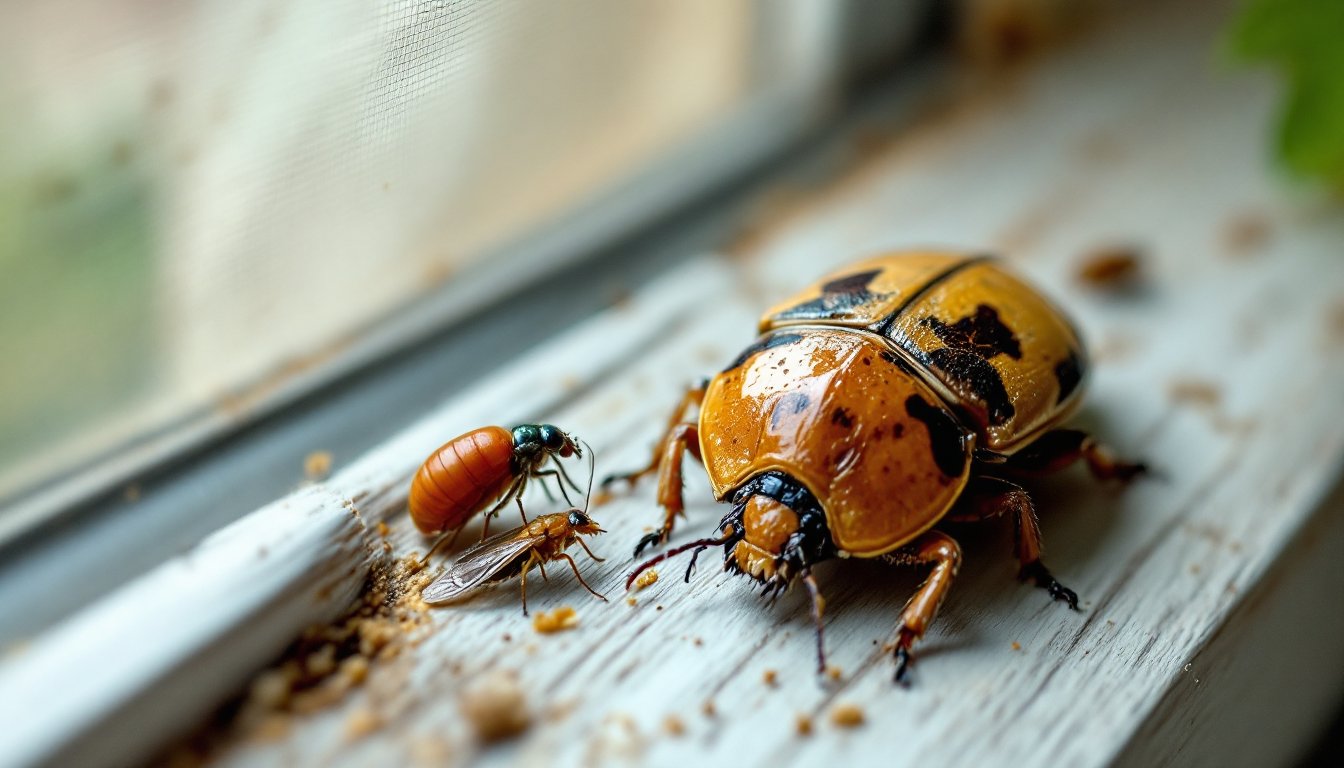
Size, shape, and wing pattern matter. Carpet beetles have a rounded, dome-shaped body and mottled coloring. Drugstore beetles are cylindrical and uniform brown. Fruit flies have prominent red eyes if you can get close enough to see them. If you’re spotting them near specific areas, pantry shelves, windowsills, houseplants, that’s your first clue.
Most of these insects don’t bite or sting, but they can damage fabrics, contaminate food, or simply become a nuisance in large numbers. Accurate identification is the first step toward effective control.
Common Types of Small Brown Winged Bugs Found Indoors
Carpet Beetles
Carpet beetles (Anthrenus species) are one of the most common indoor pests mistaken for bed bugs or pantry pests. Adult beetles are 1/8 to 3/16 inch long, oval-shaped, and covered in tiny scales that create a mottled brown, black, or tan pattern. They have short, clubbed antennae and can fly, though they’re not strong fliers.
The adults feed on pollen and nectar outdoors, but they lay eggs inside homes. It’s the larvae, fuzzy, carrot-shaped grubs, that cause damage. They feed on natural fibers like wool, silk, feathers, and pet hair. You’ll often find them in closets, under furniture, or along baseboards where lint and hair accumulate.
Carpet beetles are attracted to light, so you’ll frequently spot adults near windows in spring and early summer. If you’re seeing them year-round, there’s likely an active infestation somewhere in the home.
Drugstore and Cigarette Beetles
Drugstore beetles (Stegobium paniceum) and cigarette beetles (Lasioderma serricorne) are nearly identical pantry pests. Both are 1/10 to 1/8 inch long, reddish-brown to brown, and cylindrical with a hunched appearance. They’re strong fliers and often found crawling or flying near stored food.
These beetles infest a shocking variety of dry goods: flour, grains, cereals, dried fruit, spices, pet food, and even non-food items like books and dried flowers. Drugstore beetles can chew through cardboard, plastic bags, and foil packaging. Cigarette beetles prefer tobacco products but will settle for nearly anything organic.
You’ll typically notice them in the kitchen or pantry. If you open a box of cereal and see tiny beetles or webbing, that’s a sign of infestation. They can complete a full life cycle in 6-8 weeks under warm conditions, so populations grow quickly.
Fruit Flies and Fungus Gnats
These two are often confused, but they have different habits. Fruit flies (Drosophila species) are 1/8 inch long, tan to brown with bright red eyes. They’re drawn to fermenting or overripe fruit, sugary spills, and garbage disposals. Fruit flies can breed in drains, recycling bins, and even mop buckets if organic matter is present.
Fungus gnats (families Sciaridae and Mycetophilidae) are slightly smaller, with long legs and dark, mosquito-like bodies. Adults are poor fliers and tend to hover around houseplants, as their larvae feed on organic matter and fungi in potting soil. Overwatered plants are prime breeding grounds.
Both species have short lifespans, about a week for adults, but they reproduce rapidly. A single overwatered houseplant or compost bin can support dozens of gnats. If you’re seeing swarms near windows or sinks, check moisture sources first.
Why These Bugs Are Attracted to Your House
Understanding what draws these pests indoors helps prevent future infestations. Most tiny brown bugs are opportunistic, they don’t target your home specifically, but they’ll exploit entry points and food sources once they find them.
Food sources are the primary attractant. Pantry beetles feed on grains, spices, and dried goods. Carpet beetles eat natural fibers and pet hair. Fruit flies need fermenting sugars, and fungus gnats require moist organic matter. If you’ve recently brought home groceries, secondhand furniture, or potted plants, you may have introduced eggs or larvae.
Moisture and humidity play a major role for fungus gnats and some beetles. Overwatered houseplants, leaky pipes, damp basements, and poor ventilation create ideal conditions. Many homeowners overlook small moisture issues that turn into breeding grounds.
Light sources attract carpet beetles, drugstore beetles, and other flying insects, especially in the evening. Gaps around windows, doors, and vents allow them to enter. Even a 1/16-inch crack is enough for most beetles to squeeze through.
Seasonal factors also matter. Carpet beetles emerge in late spring when they’re looking to mate and lay eggs. Drugstore beetles thrive in warm temperatures (75-85°F) and may go dormant in winter, only to reappear when heating systems warm the home.
Finally, lack of cleaning or clutter provides hiding spots and undisturbed food sources. Pet food left out, crumbs in pantry corners, lint under furniture, and old stored goods all contribute to infestations. Regular cleaning disrupts their life cycle and removes attractants before populations explode.
How to Get Rid of Tiny Brown Flying Bugs Effectively
Eliminating these pests requires a combination of sanitation, exclusion, and targeted treatment. Pesticides alone won’t solve the problem if the food source or entry points remain.
Step 1: Identify and Remove the Source
Inspect pantries, cabinets, and storage areas. Check every box, bag, and container of dry goods. Look for webbing, holes in packaging, or live insects. Discard infested items in sealed plastic bags and take them outside immediately. Don’t just toss them in the kitchen trash, eggs and larvae can survive.
For carpet beetles, vacuum thoroughly. Focus on baseboards, closets, under furniture, and air vents. Dispose of the vacuum bag or empty the canister outside. Wash or dry-clean woolens, rugs, and pet bedding.
If you’re dealing with fungus gnats, let houseplant soil dry out between waterings. Remove any decaying plant matter from pots. For fruit flies, eliminate overripe produce, clean drains with a stiff brush and enzyme cleaner, and empty garbage frequently.
Step 2: Clean and Seal
Wipe down pantry shelves with a vinegar solution or mild detergent. Pay attention to corners and cracks where eggs may hide. Transfer remaining dry goods into airtight glass or heavy plastic containers. Beetles can chew through cardboard and thin plastic.
Inspect windows, doors, and vents for gaps. Use weatherstripping or caulk to seal cracks. Install fine mesh screens on vents and repair any torn window screens. This prevents new insects from entering.
Step 3: Use Targeted Treatments
For pantry beetles, pheromone traps can monitor activity and catch adults, but they won’t eliminate an infestation on their own. Place them in cabinets or near suspected areas.
Diatomaceous earth (food-grade) can be dusted lightly in cracks, along baseboards, and behind appliances. It’s a mechanical insecticide that damages the exoskeleton of crawling insects. Wear a dust mask during application and keep it dry for effectiveness.
For fruit flies, a DIY trap works well: fill a small bowl with apple cider vinegar and a drop of dish soap. Cover with plastic wrap, poke small holes, and leave it near the infestation. Flies enter but can’t escape.
Fungus gnats can be controlled with yellow sticky traps placed near plants to catch adults. For larvae, apply a Bacillus thuringiensis israelensis (Bti) product to the soil. It’s a naturally occurring bacterium that kills gnat larvae without harming plants or pets.
Step 4: Monitor and Prevent
After treatment, continue inspecting and cleaning regularly. Store new groceries properly and inspect them before bringing them inside. Many home organization routines include quarterly pantry cleanouts, which help catch infestations early.
If you’re still seeing bugs after two weeks of thorough cleaning and treatment, or if you suspect structural issues like wall voids harboring carpet beetles, consider contacting a licensed pest control professional. Some infestations require professional-grade insecticides or fumigation, especially in multi-unit buildings where bugs can migrate between units.
Safety note: Always wear gloves and safety glasses when handling infested materials or applying insecticides. Read product labels carefully and keep treatments away from food prep areas, children, and pets.