Table of Contents
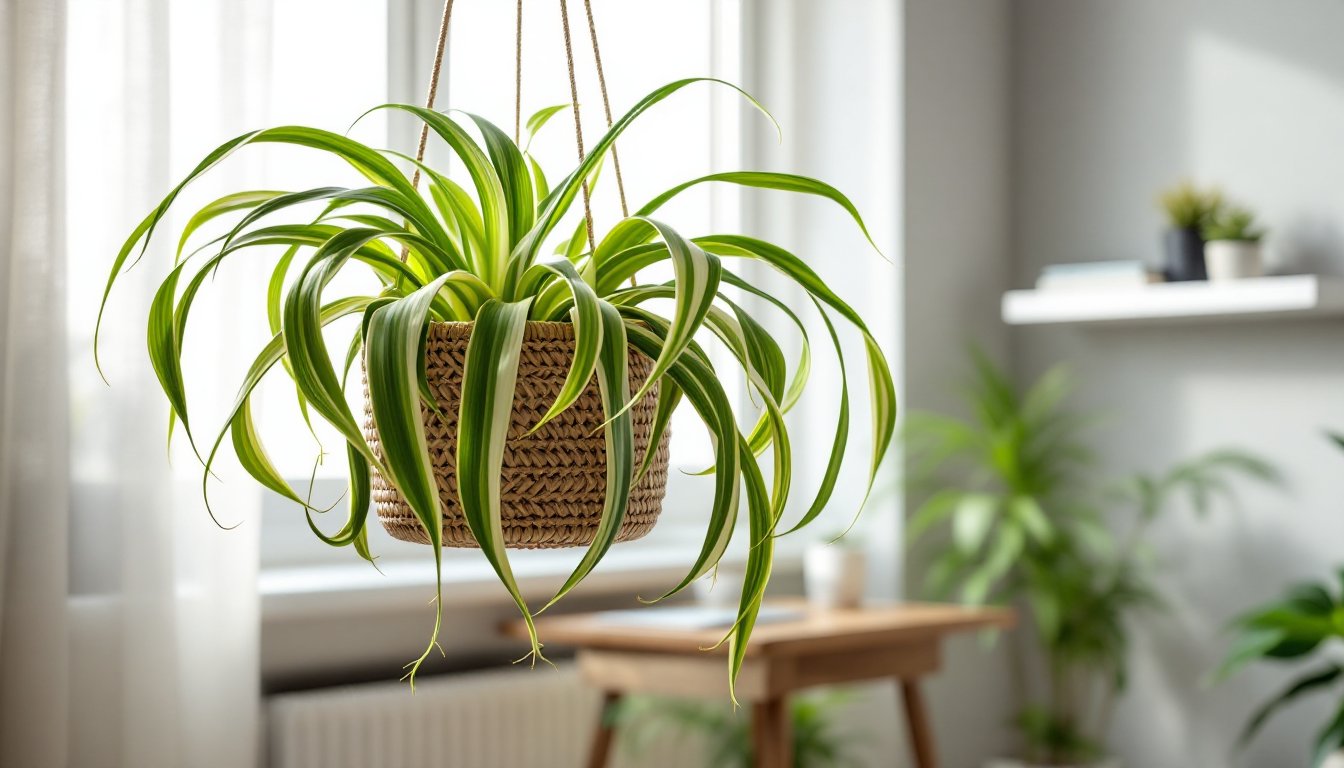
ToggleSpider plants have been household staples for decades, hanging from macramé planters in kitchens and living rooms across the country. But beyond their cascading green-and-white foliage, these unassuming plants carry a reputation as natural air purifiers. The claim sounds appealing, stick a plant in the corner, and it’ll scrub toxins from your indoor air while you sleep. But how much of that is backed by science, and how much is wishful thinking? If you’re considering spider plants as part of a healthier home strategy, you need to know what they can actually accomplish and what they can’t.
Key Takeaways
- Spider plants effectively reduce formaldehyde in controlled lab settings, but a single plant won’t significantly improve air quality in real homes without proper ventilation and mechanical filtration.
- You’d need 10 to 1,000 plants per square meter to match your home’s ventilation system, making spider plants a supplement to—not a replacement for—HVAC filters and air purifiers.
- Spider plants work best in small, enclosed spaces like home offices, bedrooms with new furniture, and laundry rooms where they can target concentrated VOC sources near windows.
- Healthy foliage and active root systems are essential for air purification; regular watering, proper soil drainage, bright indirect light, and leaf cleaning directly boost a spider plant air purifier’s effectiveness.
- Pair spider plants with other air-cleaning houseplants like pothos, snake plants, and peace lilies to broaden pollutant coverage while maintaining realistic expectations about their role in indoor air quality.
What Makes Spider Plants Effective Air Purifiers?
Spider plants (Chlorophytum comosum) earned their air-cleaning reputation from NASA’s Clean Air Study conducted in the late 1980s. That research tested various houseplants in sealed chambers to see how well they removed volatile organic compounds (VOCs), chemicals like formaldehyde, benzene, and xylene that off-gas from building materials, furniture, and household products. Spider plants demonstrated the ability to reduce formaldehyde concentrations in controlled lab conditions, which gave them their “air purifier” badge.
The plant works through a process called phytoremediation. It absorbs airborne pollutants through its leaves and breaks them down via microbial activity in its root system and soil. The stomata, tiny pores on the leaf surface, take in carbon dioxide during photosynthesis and also trap certain VOCs in the process. Root-zone microbes then metabolize these compounds into less harmful byproducts. It’s a genuine biological filtration system, just operating on a completely different scale than what most people imagine.
The Science Behind Spider Plants and Air Quality
The NASA study used small, sealed chambers with relatively high pollutant concentrations and multiple plants per cubic foot of air. In those conditions, spider plants removed up to 90% of formaldehyde within 24 hours. But real homes aren’t airtight lab chambers. You’ve got HVAC systems cycling air, doors opening, off-gassing materials constantly releasing new VOCs, and vastly more cubic footage per plant.
More recent research, including a 2019 study published in the Journal of Exposure Science & Environmental Epidemiology, found that you’d need between 10 to 1,000 plants per square meter of floor space to match the air exchange rate of a building’s ventilation system. That’s not a typo. To meaningfully reduce VOC levels in a typical 1,500-square-foot home using plants alone, you’d essentially need to convert it into a greenhouse. One spider plant on your bookshelf won’t move the needle on air quality the way a HEPA filter or proper ventilation does. But, spider plants as low-maintenance additions still offer localized benefits and pair well with mechanical filtration systems.
How Well Do Spider Plants Actually Clean Indoor Air?
Let’s be direct: a single spider plant won’t replace a dedicated air purifier, and it won’t solve issues like mold, dust, or pet dander. What it can do is provide a marginal, ongoing reduction in certain VOCs in small, enclosed spaces with limited air exchange. Think of it as a supplement, not a solution.
Spider plants are most effective in rooms with:
• Minimal ventilation (though you still need some airflow for plant health)
• Consistent pollutant sources like new furniture, pressed-wood cabinetry, or stored paint and solvents
• Small square footage such as a home office, bathroom, or walk-in closet
If you’re dealing with serious indoor air quality concerns, new construction off-gassing, chemical sensitivities, or respiratory issues, start with the mechanical basics. Ensure your HVAC filter is rated MERV 11 or higher, check that bathroom and kitchen exhaust fans vent to the outside (not into the attic), and consider a standalone air purifier with activated carbon for VOCs. Spider plants can complement those efforts, but they shouldn’t be your first or only line of defense.
One overlooked benefit: spider plants do increase indoor humidity slightly through transpiration, which can help in dry climates or during winter heating season. Drier air tends to irritate mucous membranes and can make you more susceptible to airborne irritants. A cluster of spider plants in a bedroom or living area can contribute to more comfortable humidity levels, though a humidifier will be far more effective if you’re below the recommended 30-50% relative humidity range.
Best Placement Strategies for Maximum Air Purification
If you’re committed to using spider plants for air quality, strategic placement matters more than sheer numbers. Focus on areas where VOC sources are concentrated and air movement is moderate, not stagnant, but not constantly flushed by HVAC returns.
High-priority spots:
• Home offices and craft rooms with printers, adhesives, or electronics that off-gas
• Bedrooms with new furniture or recently painted walls, VOCs are most problematic during sleep when respiratory rates slow
• Laundry rooms near stored cleaning products and detergents
• Attached garages (if conditioned and accessible) where petroleum products and paints are kept
Avoid placing spider plants directly in front of HVAC vents or returns. Rapid airflow limits the plant’s contact time with pollutants and can dry out the soil quickly. Instead, set them on shelves, countertops, or hanging planters three to six feet away from vents, where they’re still in the room’s general air circulation.
Grouping multiple spider plants in one room does increase total leaf surface area and root-zone volume, which theoretically boosts filtration capacity. But don’t sacrifice light or space, each plant still needs adequate indirect sunlight (at least six to eight hours near an east- or west-facing window) to maintain the photosynthetic activity that drives the whole purification process. A stressed, struggling plant won’t purify anything.
One layout that works: a trio of 6- to 8-inch pots on floating shelves flanking a window in a home office, plus one larger 10-inch hanging basket in the corner. That gives you varied heights, good light access, and enough biomass to make a localized dent in formaldehyde from that particleboard desk.
Caring for Your Spider Plant to Optimize Air Cleaning Benefits
A neglected spider plant won’t purify air effectively. Healthy foliage and active root systems are essential for phytoremediation, so basic care isn’t optional if you’re serious about air quality benefits.
Watering: Spider plants prefer evenly moist soil but will tolerate short dry spells. Water when the top 1-2 inches of soil feel dry, usually once a week in average indoor conditions. Overwatering causes root rot, which kills the microbes responsible for breaking down VOCs. Always use pots with drainage holes and empty saucers after watering.
Soil: Use a well-draining potting mix, ideally one formulated for houseplants with perlite or coarse sand. The root zone needs oxygen for microbial activity: compacted, waterlogged soil shuts that down. Repot every 18-24 months or when roots circle the pot’s interior.
Light: Bright, indirect light is ideal. Spider plants tolerate low light but grow more slowly and produce fewer leaves, reducing total surface area for pollutant uptake. South-facing windows can scorch the foliage, so filter with a sheer curtain or position the plant a few feet back.
Fertilizing: Feed monthly during spring and summer with a balanced, water-soluble fertilizer diluted to half strength. Overfertilizing leads to brown leaf tips and weakens the plant’s stress tolerance.
Cleaning leaves: Dust buildup blocks stomata and reduces gas exchange. Wipe leaves gently with a damp cloth every few weeks, or give the plant a lukewarm shower in the sink or tub. Proper care routines that maintain healthy foliage directly correlate with better air purification performance.
Propagation: Spider plants produce plantlets (or “spiderettes”) on long stolons. Snip these off and root them in water or soil to expand your collection without buying new plants. More plants mean more filtration capacity, and it costs you nothing but time.
Combining Spider Plants with Other Natural Air Purifiers
Spider plants work well in a mixed strategy. Different plants target different VOCs and thrive in different conditions, so layering species gives you broader coverage.
Effective combinations:
• Pothos (Epipremnum aureum), thrives in low light, removes formaldehyde and benzene
• Snake plant (Sansevieria trifasciata), tolerates neglect, filters benzene, formaldehyde, trichloroethylene, and xylene: also releases oxygen at night
• Peace lily (Spathiphyllum), removes ammonia, benzene, formaldehyde, and trichloroethylene: prefers higher humidity
• Boston fern (Nephrolepis exaltata), excellent for formaldehyde and xylene: needs consistent moisture and humidity
In a typical living room, you might place a spider plant on a bookshelf near the window, a pothos trailing from a cabinet in a dimmer corner, and a snake plant on the floor by the sofa where it won’t be disturbed. Each plant tolerates different light and water conditions, so maintenance doesn’t become overwhelming.
Don’t forget the basics: even a diverse plant collection can’t fix poor ventilation or an undersized HVAC filter. Open windows when weather permits, run kitchen and bath exhaust fans during and after use, and store VOC sources like paints and solvents in a detached shed or vented garage. Reliable home care practices from trusted sources emphasize that plants are part of a system, not a standalone fix.
Pets are another consideration. Spider plants are non-toxic to cats and dogs, making them safer than pothos or peace lilies (both mildly toxic if ingested). If you’ve got curious pets, spider plants and snake plants are your best bets.
Conclusion
Spider plants do purify air, just not at the scale or speed most people expect. They’re a low-cost, low-maintenance piece of a larger indoor air quality strategy, best used alongside proper ventilation and mechanical filtration. If you enjoy houseplants and want a modest air quality boost in small spaces, spider plants deliver. Just don’t count on them to replace a functioning HVAC system or fix serious pollutant problems on their own.