Table of Contents
ToggleVirginia’s tiny home market has matured. Buyers now have more choices, clearer zoning paths, and better financing options than they did even two years ago. Whether someone’s downsizing from a 2,400-square-foot colonial or buying their first property, tiny homes in the Commonwealth offer affordability, flexibility, and lower maintenance. But the process isn’t as simple as browsing listings and signing papers. Zoning varies wildly by county, financing isn’t always straightforward, and choosing between a wheeled model and a foundation build has real legal and lifestyle consequences. This guide walks through what’s actually available in Virginia, where to find it, and what to know before making an offer.
Key Takeaways
- Tiny homes for sale in Virginia now offer more affordable choices with clearer zoning paths and better financing options than in recent years.
- Virginia’s moderate climate, reasonable land costs outside the I-95 corridor, and DIY-friendly building culture make it an ideal state for tiny home living.
- Zoning regulations vary wildly by county—verify local ordinances before committing to land or a build, as some areas allow ADUs while others restrict THOWs to designated parks.
- Tiny houses on wheels (THOWs) classified as RVs can sidestep some zoning restrictions but may face RV parking limitations, while foundation models qualify more easily for traditional mortgages.
- RV loans, personal loans, chattel loans, and construction loans each serve different tiny home financing scenarios, with roughly 40% of buyers choosing cash purchases to avoid interest costs.
- Foundation tiny homes and ADU builders in Virginia increasingly offer permitted secondary structures, making them a clearer legal path than wheeled models in many jurisdictions.
Why Virginia Is Perfect for Tiny Home Living
Virginia combines moderate climate, diverse geography, and a growing acceptance of alternative housing. The state doesn’t experience the extreme cold that forces expensive insulation upgrades in northern states, nor the hurricane codes that complicate coastal builds. Heating and cooling a 400-square-foot home remains manageable year-round with a mini-split system and modest insulation.
The Commonwealth’s geography offers choices. Buyers can position tiny homes in the Blue Ridge foothills, near Richmond’s urban core, or along the Chesapeake Bay. Rural counties like Floyd and Nelson have been more receptive to tiny homes than Northern Virginia suburbs, but that’s shifting as municipalities update accessory dwelling unit (ADU) ordinances.
Virginia also has a DIY-friendly building culture. Local lumber yards stock dimensional lumber in standard sizes (2×4 studs are actually 1.5″ x 3.5″), and most hardware stores carry tiny-home-specific hardware like composting toilet vents and tankless water heater fittings. The state doesn’t require a contractor’s license for owner-built homes under certain conditions, though electrical and plumbing work must still meet NEC and IPC standards.
Land costs remain reasonable outside the I-95 corridor. A half-acre lot in Southwest Virginia can run $15,000–$30,000, while similar land near Charlottesville or Arlington pushes $100,000+. Property taxes on tiny homes vary depending on whether they’re classified as real property (foundation) or personal property (wheels), with foundation models typically seeing higher assessments.
Types of Tiny Homes Available in Virginia
Virginia’s market includes several distinct tiny home formats. Understanding the differences affects everything from financing to where the home can legally sit.
Tiny Houses on Wheels vs. Foundation Models
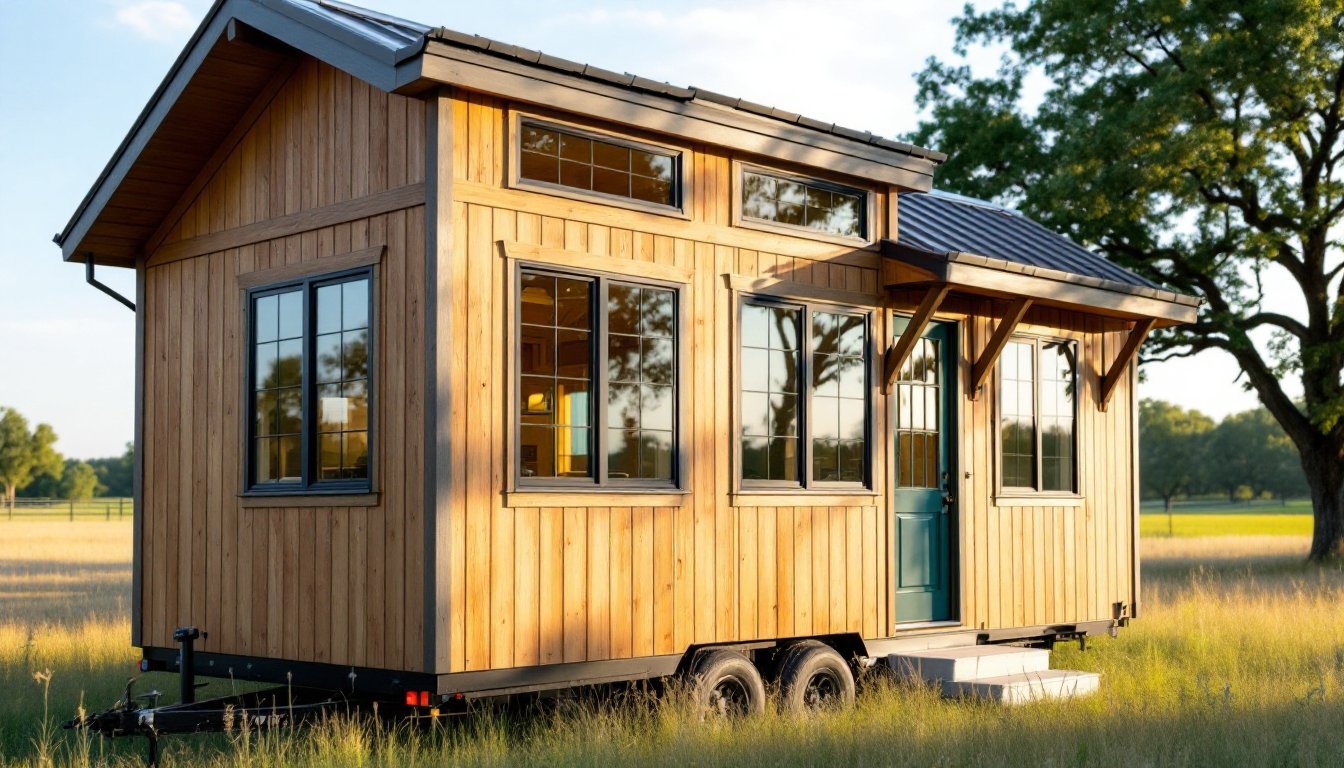
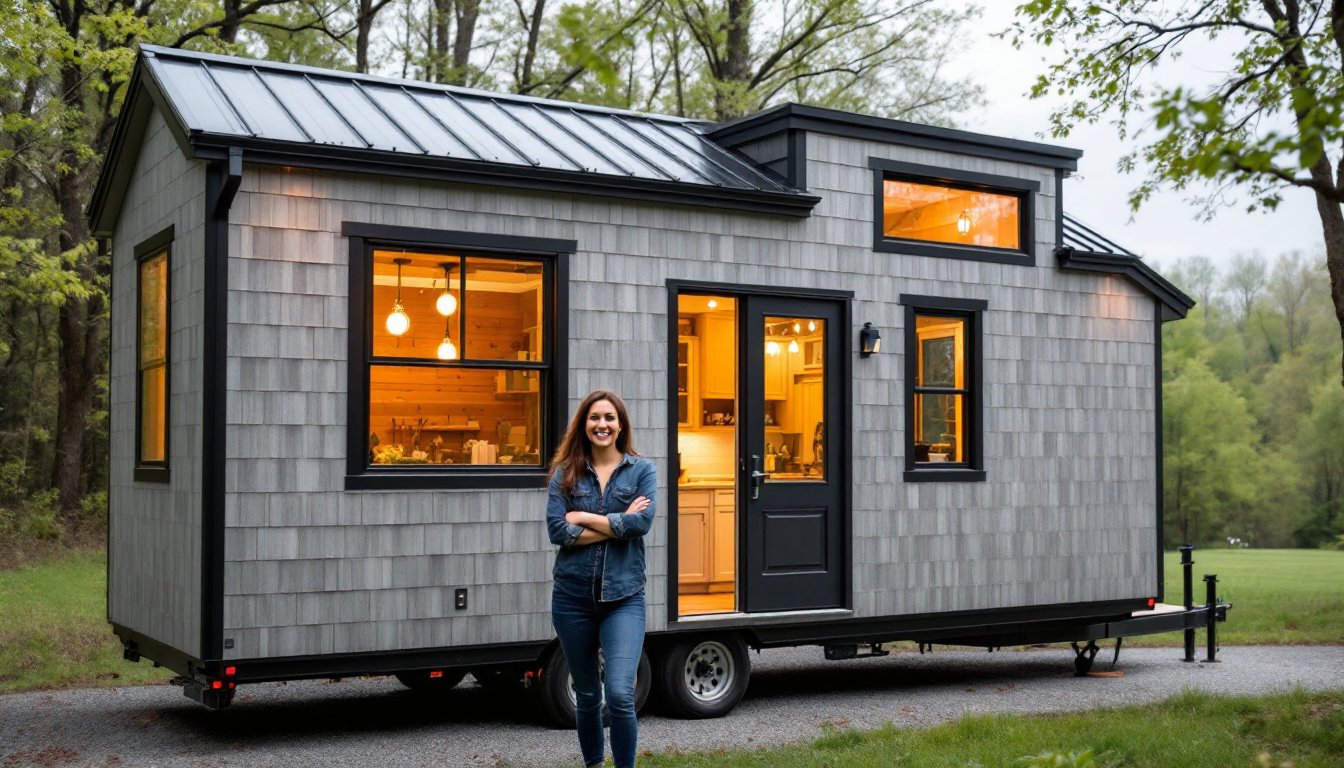
Tiny houses on wheels (THOWs) are built on trailers and classified as RVs if they meet RVIA standards. Most measure 8.5 feet wide to stay within towing limits without an oversize permit. Length varies from 16 to 32 feet, with 24 feet being the sweet spot for balancing space and maneuverability. THOWs must use RV-rated appliances and meet specific weight distribution requirements. They’re popular because they sidestep some zoning restrictions, but many counties still prohibit long-term dwelling in RVs outside designated parks.
Foundation tiny homes are permanent structures, usually under 600 square feet, built on frost-protected shallow foundations, concrete piers, or full basements. They follow the International Residential Code (IRC) Appendix Q where adopted, which sets minimum standards for habitable spaces: 70 square feet for sleeping rooms, 50 square feet for kitchens. Foundation models qualify for traditional mortgages more easily and can connect to municipal utilities without workarounds.
Prefab and modular tiny homes arrive in sections and get assembled on-site. They’re factory-built to IRC standards, which speeds inspections. Manufacturers like Studio Shed and Tumbleweed offer models that ship to Virginia, though buyers need to confirm local compliance. Those considering building techniques should note that prefab units eliminate much of the hands-on work but limit customization.
Converted structures, shipping containers, sheds, and renovated campers, occupy a gray area. A 40-foot shipping container provides 320 square feet but requires welding skills and insulation upgrades. Shed conversions must meet building codes for human habitation, which means proper egress windows, insulation values, and electrical panels.
Where to Find Tiny Homes for Sale in Virginia
Virginia’s tiny home inventory shows up in scattered places, not centralized listings. Start with tiny-home-specific builders. Companies like Tiny House Building Company (based in Fredericksburg) and Blue Ridge Tiny Homes offer custom and spec builds. Expect $60,000–$120,000 for a finished THOW, depending on finishes and appliances. Foundation models from regional builders range $80,000–$150,000 before land costs.
Online marketplaces like Tiny House Listings, Tiny Home Builders, and even Facebook Marketplace list resale units. Buyers should inspect any used THOW for frame rust, roof leaks around dormers, and moisture intrusion in wall cavities. A thermal imaging camera (or a home inspector with one) can reveal hidden problems that aren’t obvious during a walk-through.
Local RV dealers occasionally stock park models or tiny homes on wheels. These aren’t custom builds, but they’re often more affordable ($40,000–$70,000) and immediately available. Make sure any RV-classified home has been certified for year-round living if that’s the intent, many are rated only for seasonal use.
Accessory dwelling unit (ADU) builders in Virginia increasingly offer tiny home designs meant to sit on existing residential lots. These are foundation models, permitted as secondary structures. Checking current trends can help identify which builders are entering the Virginia market. Resources like HGTV sometimes feature builder profiles and model tours that give a sense of finishes and layouts.
Auctions and foreclosures occasionally include tiny homes, especially THOWs that were financed through personal loans. Buyers need to verify title and any liens before bidding. If the home was never titled as an RV, securing insurance and financing later can be complicated.
Virginia Zoning Laws and Tiny Home Regulations
Zoning is the biggest obstacle. Virginia has no statewide tiny home law: each locality writes its own rules. Some counties allow tiny homes as ADUs, others permit them only in RV parks, and a few ban them outright.
Accessory Dwelling Units (ADUs) are the clearest legal path for foundation tiny homes. Counties like Albemarle, Loudoun, and Arlington have ADU ordinances allowing secondary dwellings on single-family lots, provided they meet setback, height, and lot coverage limits. Typical restrictions: ADU must be smaller than the primary residence, often capped at 1,000 square feet, and can’t be separately sold. Some jurisdictions require owner occupancy of either the main house or the ADU.
THOWs face inconsistent treatment. If classified as RVs, they’re subject to RV parking ordinances, many counties allow RVs on residential property for up to 30–60 days but prohibit dwelling in them. A few localities (like Nelson County) permit THOWs as permanent dwellings if they meet IRC Appendix Q and are tied down with engineered anchors.
Minimum square footage laws persist in some areas. Certain counties still enforce minimums of 800–1,200 square feet for single-family dwellings. IRC Appendix Q (adopted piecemeal in Virginia) sets a minimum of 120 square feet for a dwelling with separate sleeping, cooking, and sanitation facilities, but local amendments can override it.
Building permits are required for any structure intended for habitation, whether on wheels or a foundation. Electrical, plumbing, and mechanical work must be inspected. THOWs built to RVIA or NOAH (National Organization of Alternative Housing) standards may streamline inspections, but it’s not guaranteed. Always confirm with the local building official before starting or moving a home onto a property.
Septic and well permits also apply. A composting toilet and rainwater catchment can reduce infrastructure costs, but many counties require connection to an approved water source and wastewater system. Understanding local strategies can help navigate these requirements.
Financing Your Virginia Tiny Home Purchase
Financing a tiny home isn’t like financing a traditional house. Most THOWs don’t qualify for conventional mortgages because they’re not permanently affixed to land. Foundation tiny homes fare better but can still hit roadblocks if they’re under the lender’s minimum square footage.
RV loans cover many THOWs. Rates range from 4% to 8%, terms from 10 to 20 years, and lenders typically require a 10%–20% down payment. The home must meet RV certification (RVIA or NOAH). Some lenders, like Lightstream and Essex Credit, specialize in tiny home financing and don’t require the home to be in an RV park.
Personal loans work for smaller budgets or resale units. Rates run higher (6%–12%), and terms max out around 7 years. Monthly payments can be steep, so this route makes sense only for homes under $50,000 or buyers with significant cash reserves.
Chattel loans (personal property loans) apply to THOWs and manufactured homes. They’re easier to obtain than mortgages but come with higher interest rates and shorter terms. Buyers own the home but not necessarily the land.
Construction loans suit owner-builders or custom foundation builds. They disburse in phases as work progresses, then convert to a traditional mortgage once the home is habitable and inspected. Lenders require detailed plans, a licensed contractor (or proof of owner-builder competency), and an appraisal. Sites like ImproveNet offer cost calculators that can help estimate whether a construction loan makes financial sense. Those new to the process might also review beginner resources to understand typical build costs.
Cash purchases remain common in the tiny home world. Roughly 40% of buyers pay outright, especially for used THOWs or shed conversions. Cash avoids interest and underwriting but ties up capital that could go toward land, utilities, or furnishings.
Land loans are separate. If buying land and a tiny home together, expect to finance them independently unless the home qualifies as real property. Land loans typically require 20%–50% down and carry higher rates than home mortgages.
Conclusion
Buying a tiny home in Virginia requires more assignments than buying a traditional house, but the market is more accessible now than ever. Zoning is loosening in key counties, builders are more experienced, and financing options have expanded. The biggest mistake is assuming a tiny home can go anywhere, always verify local ordinances before committing to land or a build. With the right preparation, Virginia offers a solid landing spot for tiny living.