Table of Contents
ToggleTiny home interiors reveal a level of ingenuity that most conventional homes never achieve. Every wall, corner, and vertical surface earns its keep through careful planning and smart design choices. These compact spaces, typically between 100 and 400 square feet, prove that downsizing doesn’t mean sacrificing comfort or style. Instead, they challenge builders and dwellers to think critically about what they truly need and how to build it efficiently. This tour walks through the key areas of a tiny home, examining the design strategies, material choices, and layout decisions that make small-scale living functional and surprisingly spacious.
Key Takeaways
- Tiny home interiors maximize efficiency through vertical storage, built-in cabinetry, and multi-functional furniture that serve multiple purposes throughout the day.
- Strategic design choices like pocket doors, fold-down countertops, and storage stairs eliminate wasted space while keeping tiny homes functional and comfortable.
- Kitchens in tiny homes use galley layouts, scaled-down appliances, and creative storage solutions inspired by boat galleys and RVs to compress full functionality into 20–40 square feet.
- Sleeping lofts reclaim unused vertical space but require careful framing with 2×6 or 2×8 joists and proper ventilation, though main-floor bedrooms offer an alternative for easier access.
- Light colors, oversized windows, appropriately scaled furniture with exposed legs, and strategic lighting create living areas that feel spacious despite compact dimensions.
- Success in tiny home design comes from treating every element as infrastructure with purpose rather than decoration, applying lessons relevant to any space-constrained project.
Why Tiny Home Interiors Maximize Every Square Inch
Tiny home interiors operate on a principle of ruthless efficiency. There’s no room for dead space, redundant furniture, or purely decorative elements that don’t pull double duty. Builders achieve this through vertical storage, built-in cabinetry, and furniture that transforms based on the time of day.
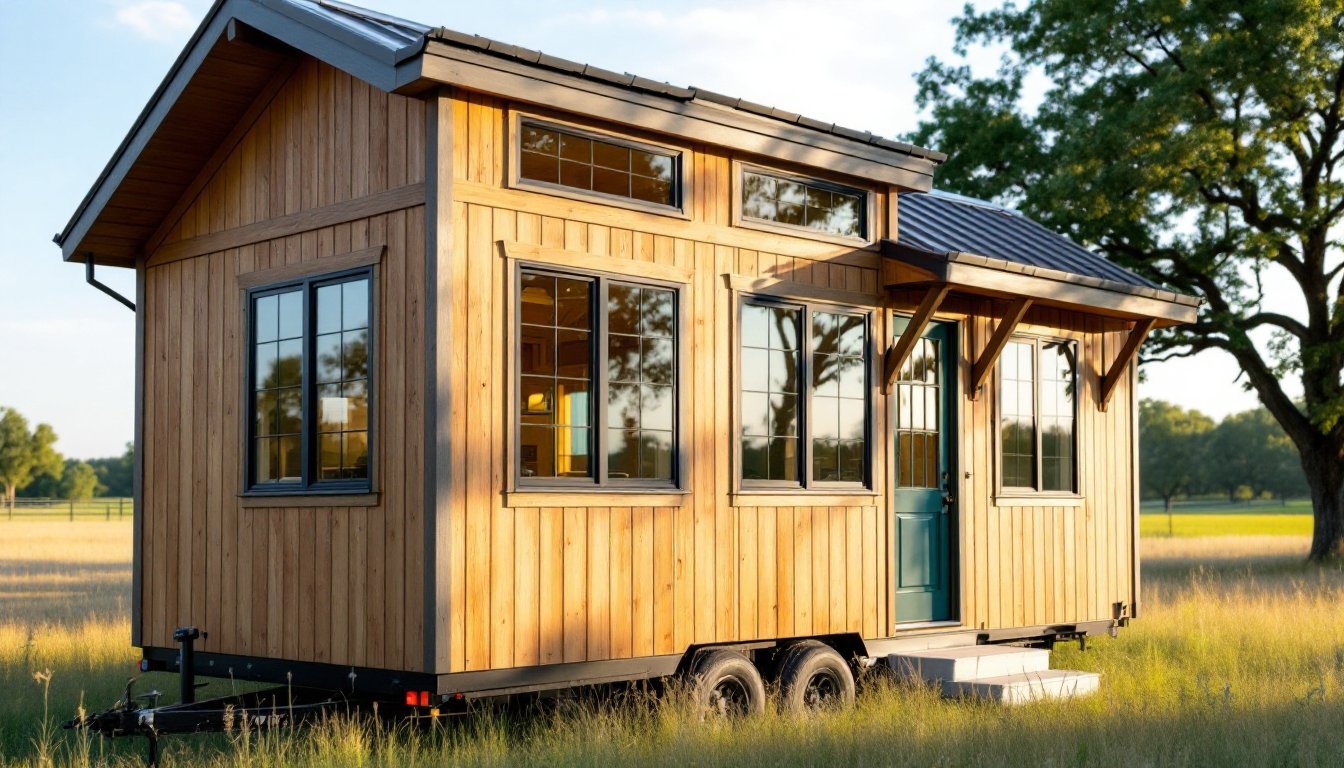
Most tiny homes use wall studs spaced at 16 inches on center, following standard framing practices but with shallower depth to preserve interior volume. Walls often incorporate recessed shelving between studs, adding storage without protruding into the living area. Ceiling height matters, many tiny homes push to 13.5 feet exterior height (the maximum for road-legal trailers without special permits) to allow for sleeping lofts and vertical storage.
Every design decision ties back to function. Pocket doors replace swing doors to save floor space. Stairs double as drawer units. Countertops fold down when not in use. This isn’t minimalism for aesthetics, it’s practical spatial planning driven by hard dimensional constraints.
Load-bearing considerations also shape interiors. In trailer-based tiny homes, weight distribution affects towing safety and tire wear. Builders often place heavier fixtures (water heaters, refrigerators, bathroom fixtures) over or near the axles. Loft framing must support live loads of 40 pounds per square foot (per IRC guidelines for sleeping areas), requiring careful joist sizing and spacing even in compact builds.
Multi-Functional Furniture and Storage Solutions
Multi-functional furniture defines tiny home living. A dining table isn’t just a dining table, it’s a workspace, prep surface, and often a fold-down or slide-out unit that tucks away when meals are done. Murphy beds remain popular, though newer designs favor horizontal pivot mechanisms that feel lighter and easier to operate than older spring-loaded models.
Storage happens everywhere. Staircases to lofts are built as modular drawer units, with each tread concealing a pull-out bin. Bench seating in living areas lifts to reveal storage compartments for seasonal clothing, tools, or pantry overflow. Toe-kick drawers under kitchen cabinets capture otherwise wasted space.
Built-in cabinetry beats freestanding furniture in tiny homes. Custom pieces fit exact dimensions, eliminating gaps and maximizing usable volume. Many builders use 3/4-inch plywood for cabinet boxes (lighter than MDF and stronger than particleboard) and face them with hardwood or laminate for durability.
Wall-mounted desks, fold-down ironing boards, and retractable drying racks keep floor space open. Magnetic knife strips, pegboards, and hanging pot racks move kitchen tools to vertical surfaces. Overhead cabinets run to the ceiling, no dusty dead space above. Successful tiny home layouts treat furniture as infrastructure, not decoration.
Kitchen Design in Tiny Homes
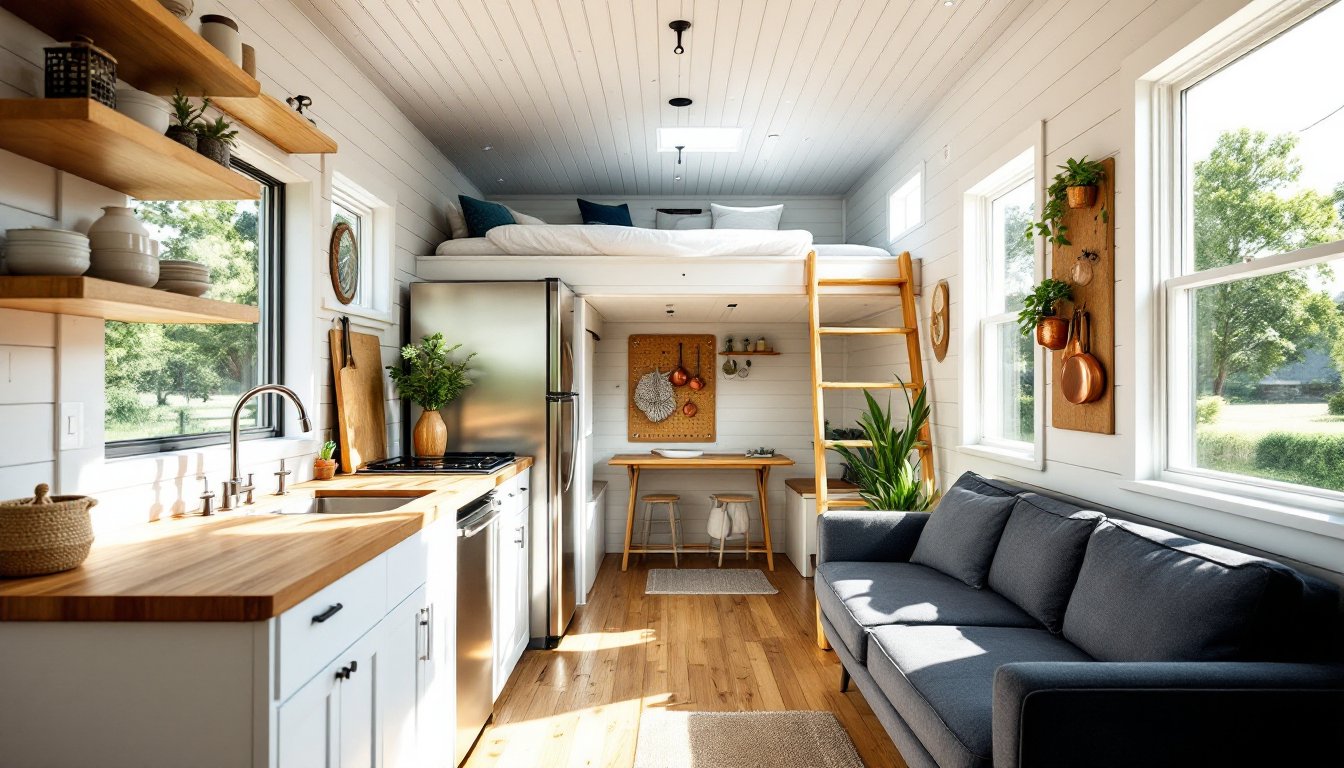
Tiny home kitchens compress full functionality into as little as 20 to 40 square feet. Galley layouts dominate, placing sink, cooktop, and refrigerator along one or two walls with minimal walking distance between work zones. Counter depth shrinks to 18 to 24 inches in the tightest builds, compared to the standard 25 inches in conventional homes.
Appliances scale down but stay capable. 24-inch ranges with three burners and a small oven replace full-size models. Apartment-size refrigerators (10 to 12 cubic feet) or under-counter units fit beneath countertops. Some builders install two-burner induction cooktops, which offer precise heat control, stay cool to the touch, and don’t require venting, a big advantage when roof penetrations add cost and leak risk.
Sinks are often single-bowl stainless steel units, 15 to 18 inches wide, paired with low-profile faucets to preserve window views and light. Pull-out spray heads add function without taking up counter space. Dishwashers are rare but not unheard of: compact 18-inch models exist, though most tiny homeowners hand-wash.
Storage gets creative. Open shelving replaces upper cabinets to avoid a closed-in feel, though this requires keeping dishware tidy. Magnetic spice racks, over-sink cutting boards, and nesting cookware maximize what little space exists. Builders often install a tambour door appliance garage to hide toasters and coffee makers. For design inspiration that applies to compact cooking spaces, many tiny homeowners look to boat galleys and RV kitchens, which have solved similar problems for decades.
Sleeping Lofts and Bedroom Layouts
Sleeping lofts reclaim space that would otherwise go unused, but they come with trade-offs. Headroom is tight, 36 to 42 inches is common, enough to sit up but not stand. Access happens via ladder, alternating-tread stairs, or storage stairs. Ladders save space but aren’t practical for older adults or anyone with mobility limits. Alternating-tread stairs (also called ship’s ladders) split the difference, offering something climbable with one hand free.
Loft framing requires attention to load and deflection. 2×6 or 2×8 joists spaced at 16 inches on center provide adequate support for a sleeping platform and mattress. Joist hangers attach to wall studs or a ledger board, and blocking between joists prevents twisting. Plywood or OSB decking tops the frame, usually 3/4-inch thickness to avoid bounce.
Ventilation and egress matter in loft bedrooms. Most jurisdictions don’t classify tiny homes as permanent dwellings, so IRC egress requirements (windows large enough for emergency exit) don’t always apply. Still, a window or roof vent improves airflow and keeps the loft from feeling like an attic. Small USB-powered fans help circulate air in summer.
Some tiny homes skip the loft entirely, placing the bed on the main floor. This works best in homes with ground-level foundations rather than trailers, where length restrictions are less severe. A main-floor bedroom suits those who want easier nighttime access or plan to age in place. It also avoids the claustrophobia some people feel in a low-ceiling loft.
Bathroom Innovations for Small Spaces
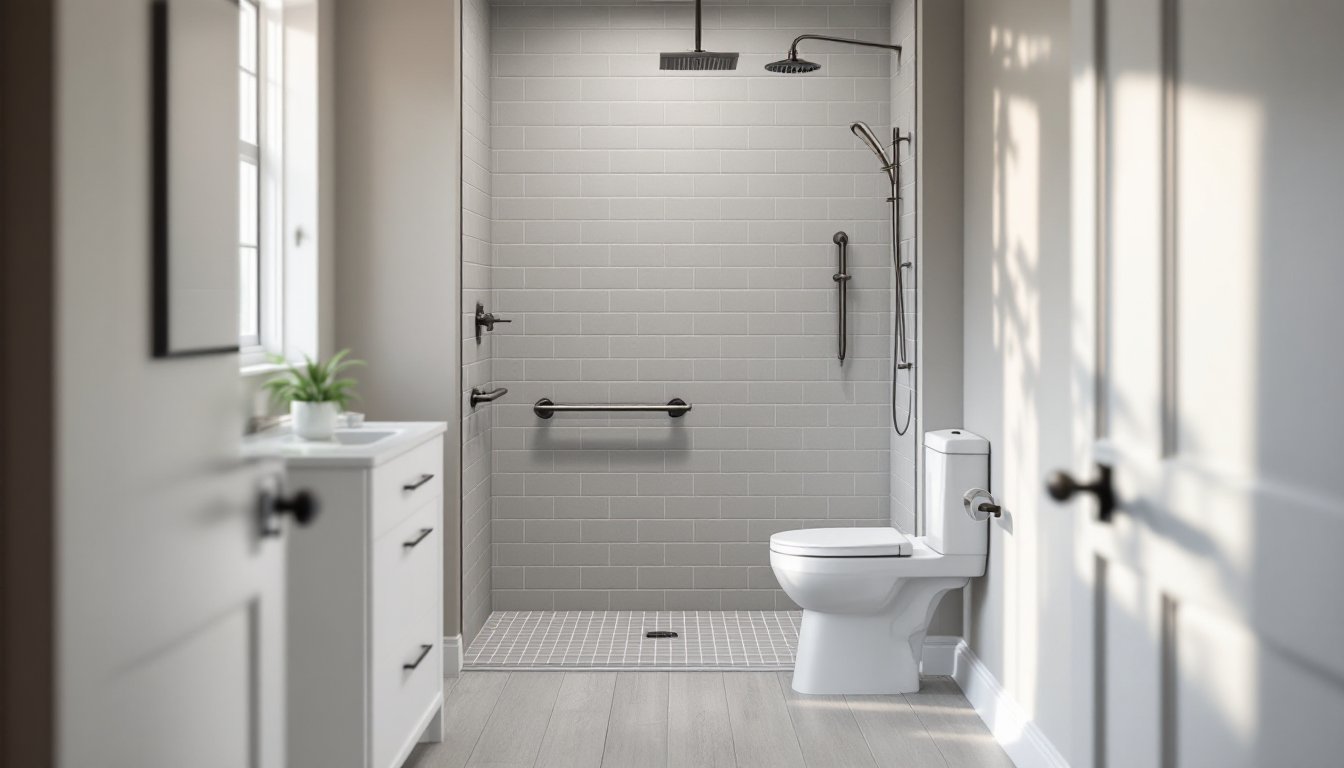
Tiny home bathrooms pack a toilet, sink, and shower into 15 to 30 square feet. Wet baths, where the entire bathroom serves as the shower enclosure, save space by eliminating a separate shower stall. Floors slope slightly toward a central drain, and all fixtures tolerate water exposure. This design borrows from RVs and marine heads, where space is equally tight.
For those who prefer separation, corner showers with neo-angle doors or curved glass maximize usable space. Shower pans as small as 32 x 32 inches fit in tight corners, though 36 x 36 inches feels less cramped. Low-profile acrylic or fiberglass pans weigh less than tile over mortar, an important consideration in trailer-based builds.
Toilets come in three flavors: traditional flush, composting, and incinerating. Composting toilets eliminate the need for a black-water holding tank and work well in off-grid setups. Models separate liquid and solid waste, use peat moss or coconut coir as a medium, and vent odors outside. They require periodic emptying, every few weeks for a two-person household. Incinerating toilets reduce waste to ash but need significant electrical power (or propane) and proper venting.
Sinks mount to walls or perch on narrow vanities with minimal countertop. Pedestal sinks save space but offer no storage, so most builders opt for a small vanity with a single door or drawer. Mirrors often hide recessed medicine cabinets. Tankless or point-of-use electric water heaters deliver hot water without the bulk of a traditional tank, though they require adequate electrical service (usually a dedicated 120V or 240V circuit).
Ventilation is non-negotiable. A bathroom exhaust fan rated at 50 CFM or higher prevents moisture buildup and mold. Ducts should vent outside, never into an attic or wall cavity. Use rigid or semi-rigid duct rather than flexible to reduce back pressure and lint buildup.
Living Areas That Feel Spacious and Inviting
Creating a living area that doesn’t feel cramped demands smart layout and material choices. Light colors on walls and ceilings reflect natural light and visually expand the space. White, pale gray, and soft beige dominate tiny home palettes, though accent walls in deeper tones add warmth without closing things in.
Large windows make a huge difference. Many tiny home builders install oversized units, sometimes 3 feet wide or more, to flood interiors with daylight and blur the line between inside and out. South-facing glass captures passive solar heat in winter (helpful in cold climates), but requires shading or high-performance low-E coatings to prevent overheating in summer.
Furniture scale matters. A standard sofa overwhelms a tiny living room, but a loveseat or modular sectional fits better. Pieces with exposed legs (rather than skirted bases) create visual breathing room by letting light pass underneath. Glass or acrylic coffee tables disappear visually while still providing surface area.
Smart organization strategies prevent clutter from swallowing the space. Hooks, baskets, and trays corral everyday items. Open shelving displays books and decor but requires discipline, too much stuff looks messy fast. Closed storage (cabinets, drawers, bins) hides less attractive necessities.
Ceiling treatments add dimension. Many tiny homes use tongue-and-groove pine or shiplap on ceilings, running boards lengthwise to emphasize the longest dimension. Recessed LED lighting avoids the visual clutter of pendant fixtures and provides even, shadow-free illumination. Dimmer switches let residents adjust brightness for different activities and times of day.
Flooring choices lean toward durable, lightweight materials. Luxury vinyl plank (LVP) mimics hardwood, resists water, installs over a variety of subfloors, and weighs far less than tile or solid wood. Cork and bamboo also appear in tiny homes, offering some give underfoot and natural aesthetic appeal. Whatever the material, light finishes help the floor recede visually rather than segment the space.
Conclusion
Walking through a well-designed tiny home reveals how much function can fit into minimal square footage. Success comes from treating every design choice as an opportunity to add utility, light, or storage. It’s not about making do with less, it’s about building better from the start. Whether someone’s planning a DIY build or touring finished models for inspiration, the lessons from tiny home interiors apply to any project where space is at a premium.